Parallel TCG Game Manual
The World of Parallel↩
Welcome to Parallel, a Trading Card Game (TCG) set in the far future of our solar system.
Long ago, Earth stood on the brink of collapse. Its resources were exhausted, its ecosystems failing, and its future slipping away. As resources dwindled, humanity searched desperately for a solution, turning to a new form of fission enhanced by antimatter. Instead of salvation, it unleashed disaster.
Radiation spread across the planet from the ruined fission sites, poisoning the surface and reshaping the world. Earthquakes shattered continents. Violent storms tore through the skies. Tsunamis consumed entire coastlines. As the planet convulsed under the weight of this extinction-level cataclysm, humanity was forced to make an impossible choice, flee or die.
Four great expeditions abandoned Earth in search of survival among the stars. One remained behind, descending deep beneath the planet’s surface into vast bunker networks to endure the fallout.
Over the centuries, those separated remnants of mankind adapted to radically different worlds, conditions, and hardships. Their bodies changed. Their societies changed. Their beliefs changed. What emerged were five distinct branches of mankind, each living in parallel to the others.
Now, after thousands of years, Earth has begun to recover. The cataclysm has subsided, and as a result of the old fission experiments, a powerful new source of energy has emerged. The five fractured Parallels now converge once more, each seeking to claim humanity’s former home and shape its future anew.
In Parallel, you will choose a faction, master its strategy, and lead its forces into battle. Whether through technological supremacy, relentless adaptation, ruthless ambition, unwavering faith, or unyielding resilience, every Parallel fights for the same prize: humanity’s future.
Only one vision will prevail.
Intro To The Five Parallels↩
Players will build decks representing one of these Parallels, each with unique playstyles, to compete against each other.

Augencore
Pushed to the cold reaches of the solar system, the Augencore were forced to shed their organic limitations to survive. Thanks to rigid research and resourceful mining operations, they built their mighty ship, CAINE-1, into a city-sized behemoth. By augmenting their bodies with advanced cybernetics, the Augencore return to Earth not as the people who left, but as enhanced, augmented versions of progress, desperate to salvage their dying ship.
Earthen
The Earthen are those who stayed behind. The fallout from the Cataclysm and the ensuing miasma may have forced the last of them underground, but over thousands of years they slowly rejuvenated their ancient bonds with nature, returned to the surface, and became one with the planet again. In the battle for Earth, they are dedicated to defending their sacred Primean groves to the death.
Kathari
When the Artemis Proxima ship arrived on Jupiter’s moon, Europa, nobody expected a single human to survive. But deep under the surface of the frozen planet, the Kathari found a way. It took thousands of years of genetic manipulation to establish their finest Alpha lineage, but now a decaying genome from excessive cloning is creating an uncertain future, forcing them to join the battle for Earth.

Marcolian
The power hungry Marcolian are the supreme rulers of Mars. They not only populated the planet after the Exodus, but they created immeasurable power, wealth, and prosperity by funding advanced scientific research and military advancements. Backed by authoritarian leadership based within the Crimson Room, the Marcolian are always willing to start and finish a fight with excessive force.
Shroud
When the crew aboard the New Dawn ship was suddenly consumed by a massive black hole, their search for life beyond the solar system came to a horrific halt. Instead, they somehow punched through to the other side as devout followers of a dark entity known as The Great One. From beyond the void, this presence quietly wields his immeasurable power, corrupting enemies in mysterious and mind-twisting ways.
How To Play↩
What is Parallel TCG?↩
Parallel is a turn-based strategy game where players duel to reduce the Enemy Player’s Health to 0 using a combination of cards that represent Units, Effects, Relics, and Upgrades.
Getting Started↩
Deck Construction↩
Tip: If you’re a new player, we recommend using Starter Decks gained through playing the Quickplay game mode and skipping this section.
Before you can play, you first need to construct a deck. Decks consist of 40 cards and a Paragon. Paragons are leaders of their respective Parallels that offer unique synergies and encourage different playstyles. Be sure to consider what Paragon fits your desired strategy when building your deck. Decks can include cards from your chosen Paragon’s Parallel and Universal cards. Up to 3 copies of a card are allowed, except for Legendary cards, which are limited to 1 copy per deck. You’ll learn more about deck construction in the “Creating Your Own Deck” section later on.
Game Cards↩
How to Read a Card↩
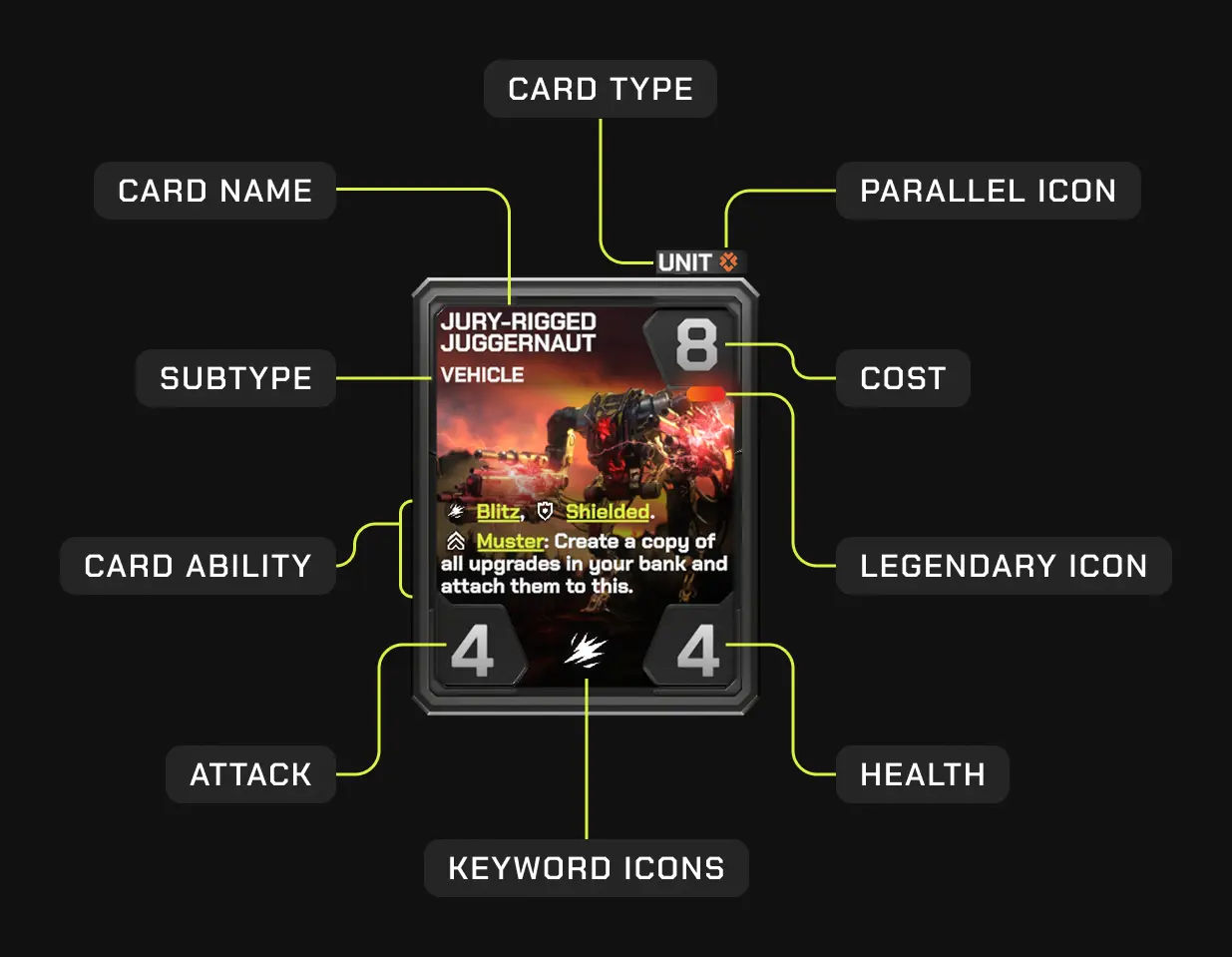
- Card Name
- The primary way to identify a card.
- Card Type
- There are various types of cards in Parallel, each with different purposes.
- Parallel Icon
- This indicates what Parallel a card belongs to.
- Sub-type
- Many Units are divided into various sub-types. Specific abilities affect cards of a particular sub-type.
- Cost
- This indicates how much energy it takes to play a card.
- Legendary Icon
- This indicates that a card is Legendary. There can only be 1 copy of a Legendary card in your deck, compared to the normal 3.
- Attack
- A Unit’s attack indicates how much damage it can deal to the Enemy Player and Enemy Units.
- Health
- A Unit’s health indicates how much damage it can take before being destroyed.
- Card Ability
- Special card abilities are written here. These abilities can affect the card itself, other cards, or players within the game. Each ability has information on what they affect and any necessary triggers to utilize the ability. For Units, some of these special abilities are written as Keywords. Keywords are preset abilities on Units that define a specific ability or a specific way to trigger an ability.
- Keyword Icons
- Keywords in Parallel are visualized in one of two ways. Some Keywords are depicted via special in-game visual effects, and others are depicted through icons.
Card Types↩
Unit
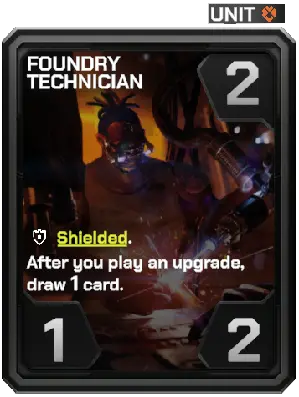
Cards that represent characters within the Parallel world, and are your soldiers on the battlefield. You can use Units to battle other Units or attack the Enemy Player directly to reduce their life to zero.
Effect
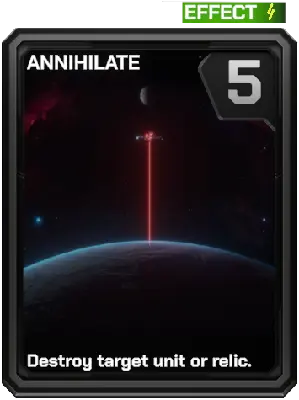
One-time use cards with immediate impact. There are a wide variety of Effects that exist within Parallel that can aid in your deck’s objective.
Relic
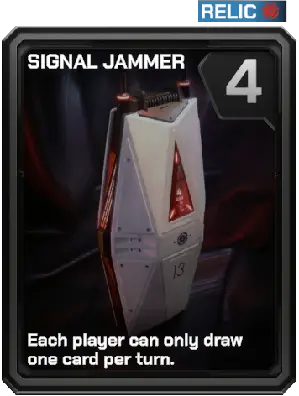
These cards persist on the Field when played and provide ongoing benefits.
Upgrade
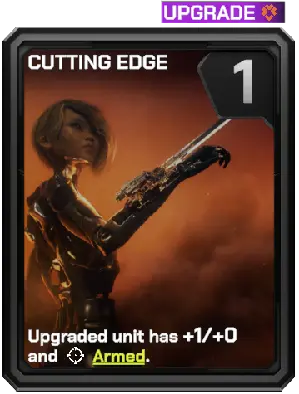
Enhance Units with a combination of additional abilities, attack, or health. One Upgrade attaches to one Unit.
Split
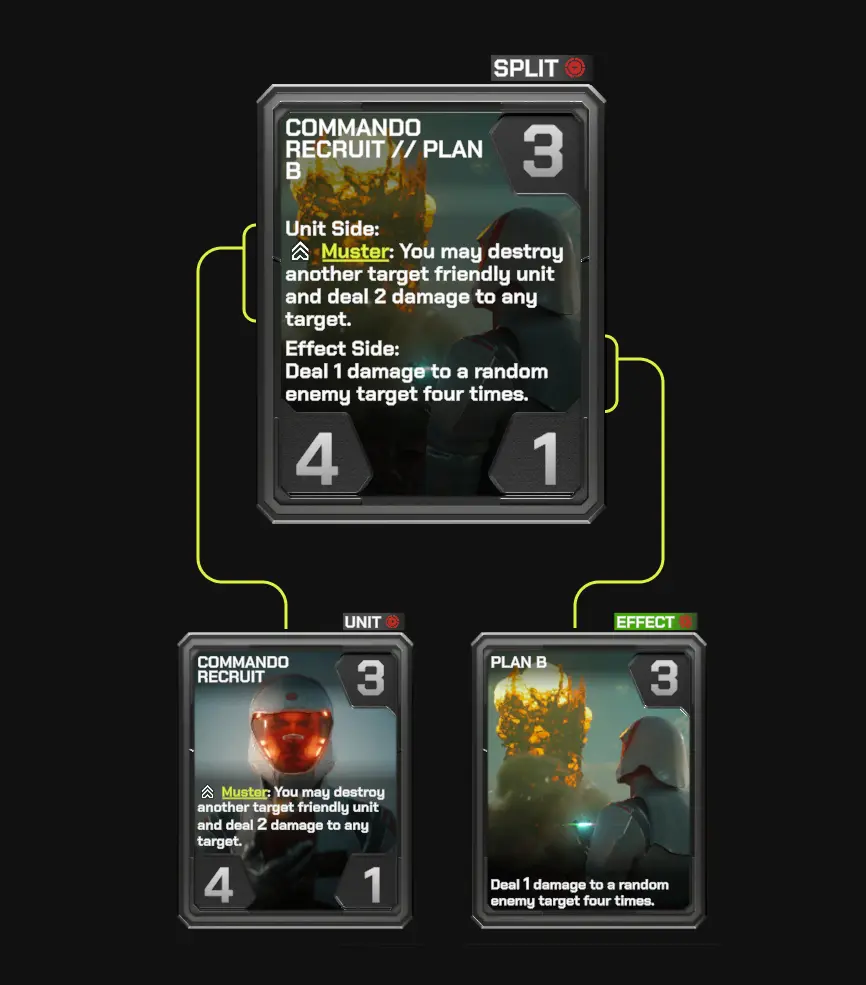
These cards have an associated Unit card and Effect card built into them. When played you can choose to either utilize the Unit or the Effect.
Paragons↩
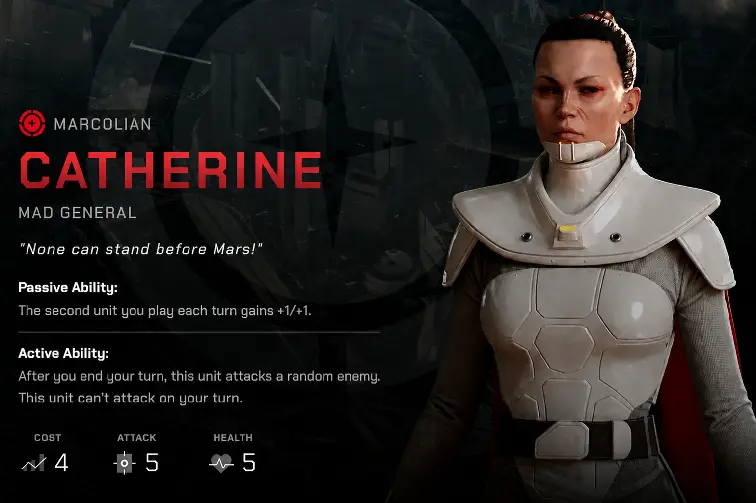
In our story, Paragons are leaders within their respective Parallels. They lead their factions into battle and provide major contributions to their success. Every deck in Parallel must include a Paragon leader. They each have a Passive Ability, which is ongoing and provides bonuses to certain playstyles. Once per game, a Paragon can be played as a Unit by paying their Energy Cost. When played as a Unit, they have access to powerful Active Abilities capable of turning the tide of battle. Their Passive Ability persists while on the Field and even upon their defeat.
Understanding the Game Board↩
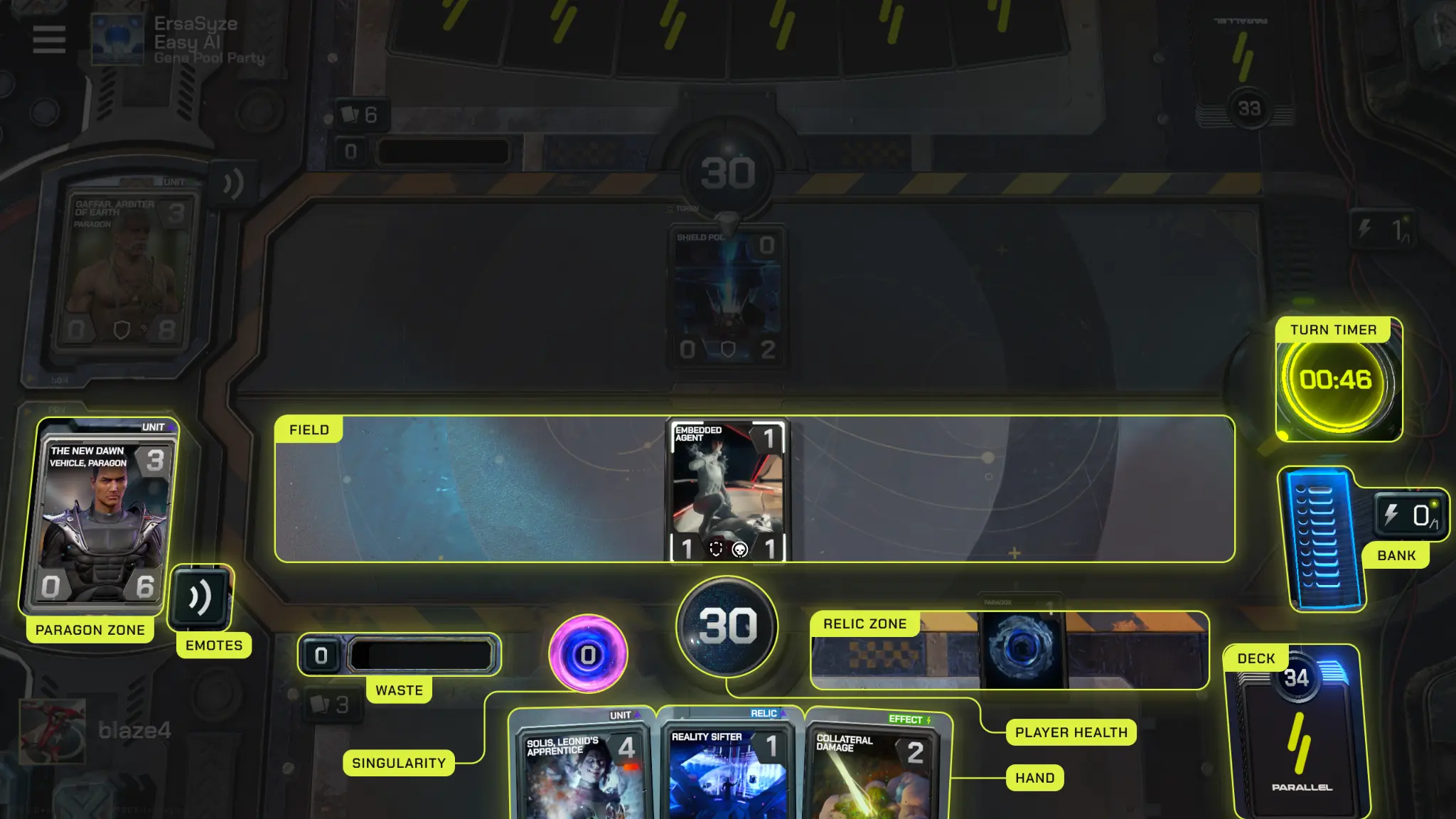
The board is split up into two mirrored halves. Below is an explanation of each part of the board, as seen from your perspective. The Enemy Player’s board is exactly the same, just mirrored.
- Hand
- This is where each player’s unplayed cards are stored. Cards drawn from the Deck go to the Hand.
- Deck
- This is where undrawn cards are stored for each player.
- Field
- Where you put your cards to play them from your Hand. The Field is also where played Units exist. Units on the Field can attack, activate abilities, and be targeted by other cards.
- Relic Zone
- A subsection of the Field where played Relics exist. Relics in the Relic Zone can activate their abilities and be targeted by other cards.
- Bank
- Stores your Banked cards for Energy generation. It also displays your available and total Energy.
- Turn Timer
- Identifies how much time is left during each player’s turn. It also indicates a player’s turn based on the timer’s color and which indicator is illuminated. If it is your turn, the timer is yellow and the bottom light is on. If it is the Enemy Player’s turn, the timer is white and the top light is on.
- Paragon Zone
- This is where your Paragon is stored. You can play your Paragon from this zone if you have the required energy.
- Emotes
- Use an emote button to communicate with the Enemy Player.
- Waste
- Where each player’s discarded, destroyed, or used cards go.
- Singularity
- A special area for Banished cards or special circumstances. Only the Shroud Parallel can access the Singularity.
- Health Total
- This is your life amount as a player. If it reaches 0, you lose the game.
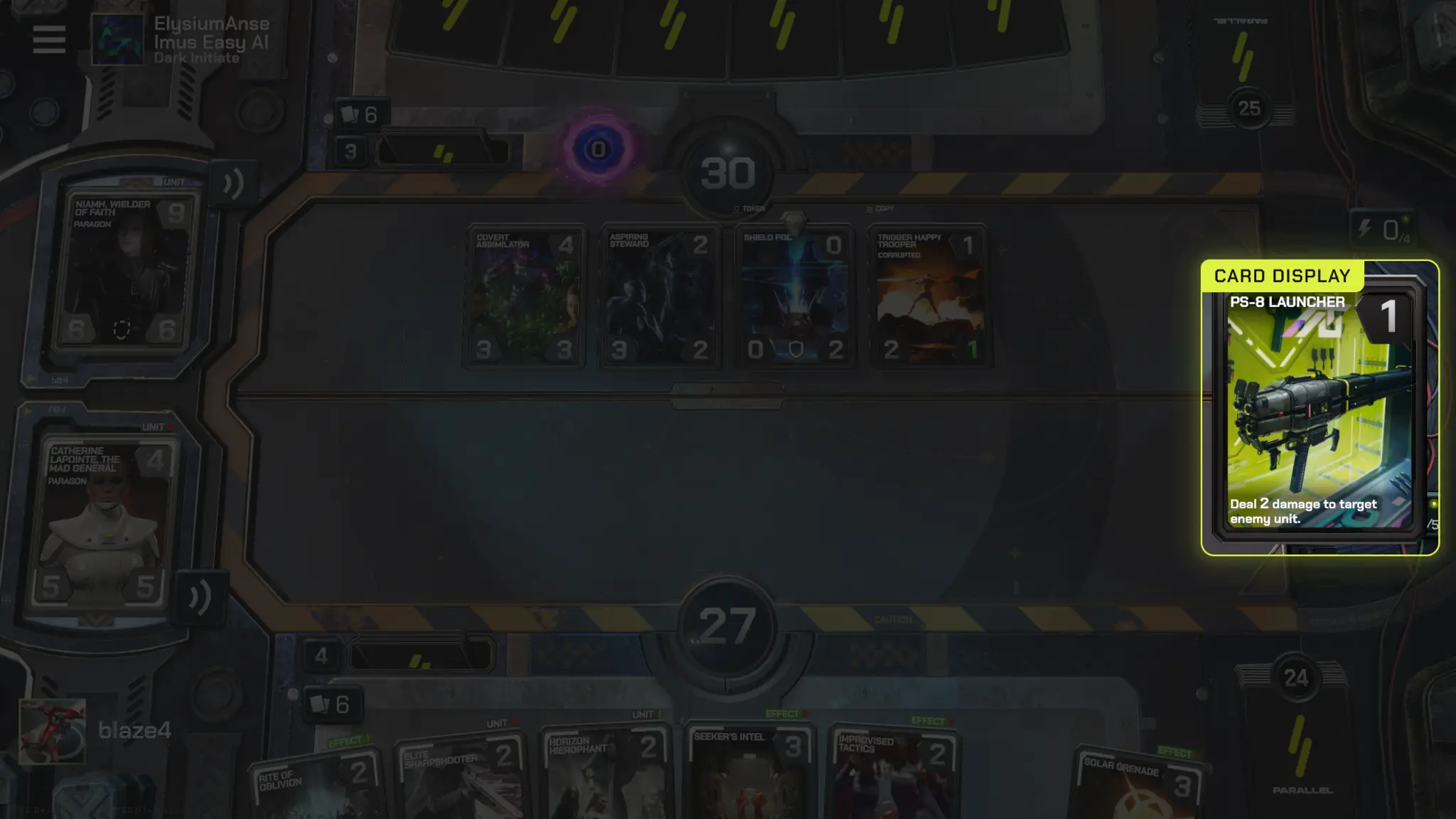
- Card Display
- This is where cards appear while their abilities are resolving. You can see this below.
The Basics↩
Gaining Energy↩
To play your cards, you first need to have enough Energy. You gain Energy in Parallel by Banking. Banking is when you take a card from your Hand and drag it into the Bank zone. When you Bank a card, you will increase your Max Energy by 1 and gain an available Energy immediately. You can only Bank once each turn. At the start of each of your turns, you will refresh your available Energy to your Max Energy. A player may only get to 10 Max Energy through Banking in a game.
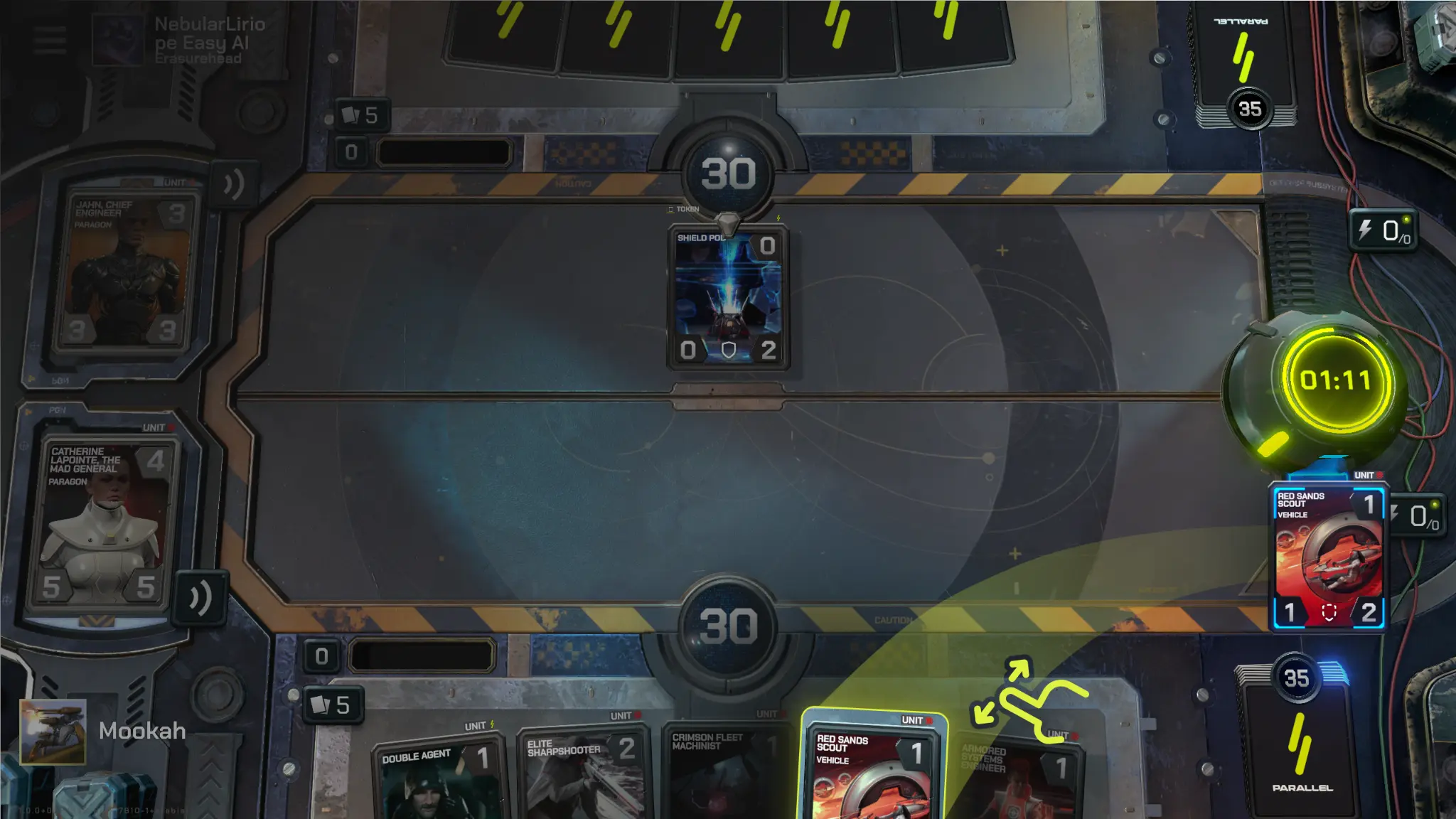
Playing Cards↩
To play a card, you must be able to spend available Energy equal to the card’s Cost. You can see how much Energy you have by looking at your Bank. The game will let you know if a card can be played from your Hand if the frame around it is illuminated.
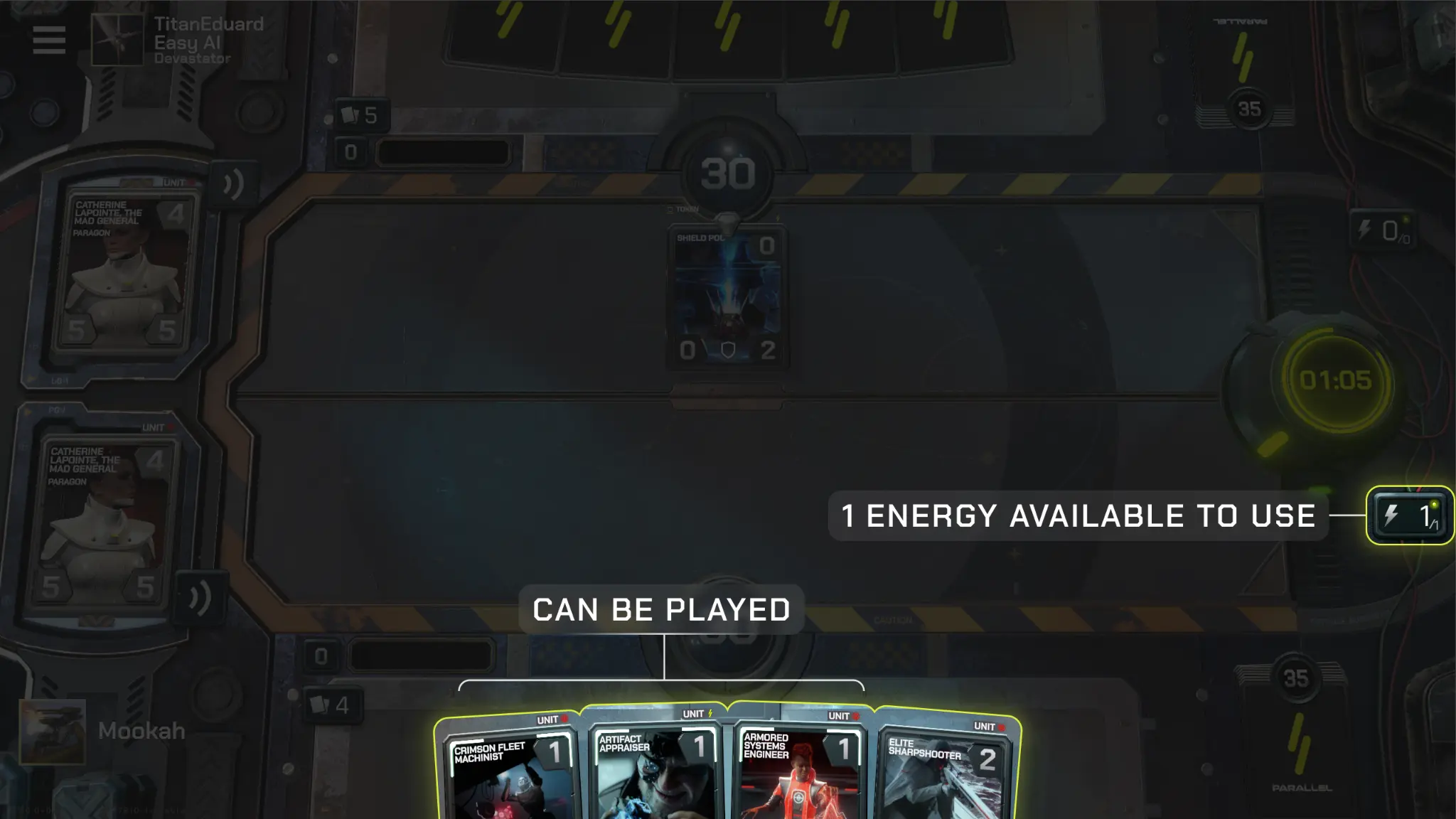
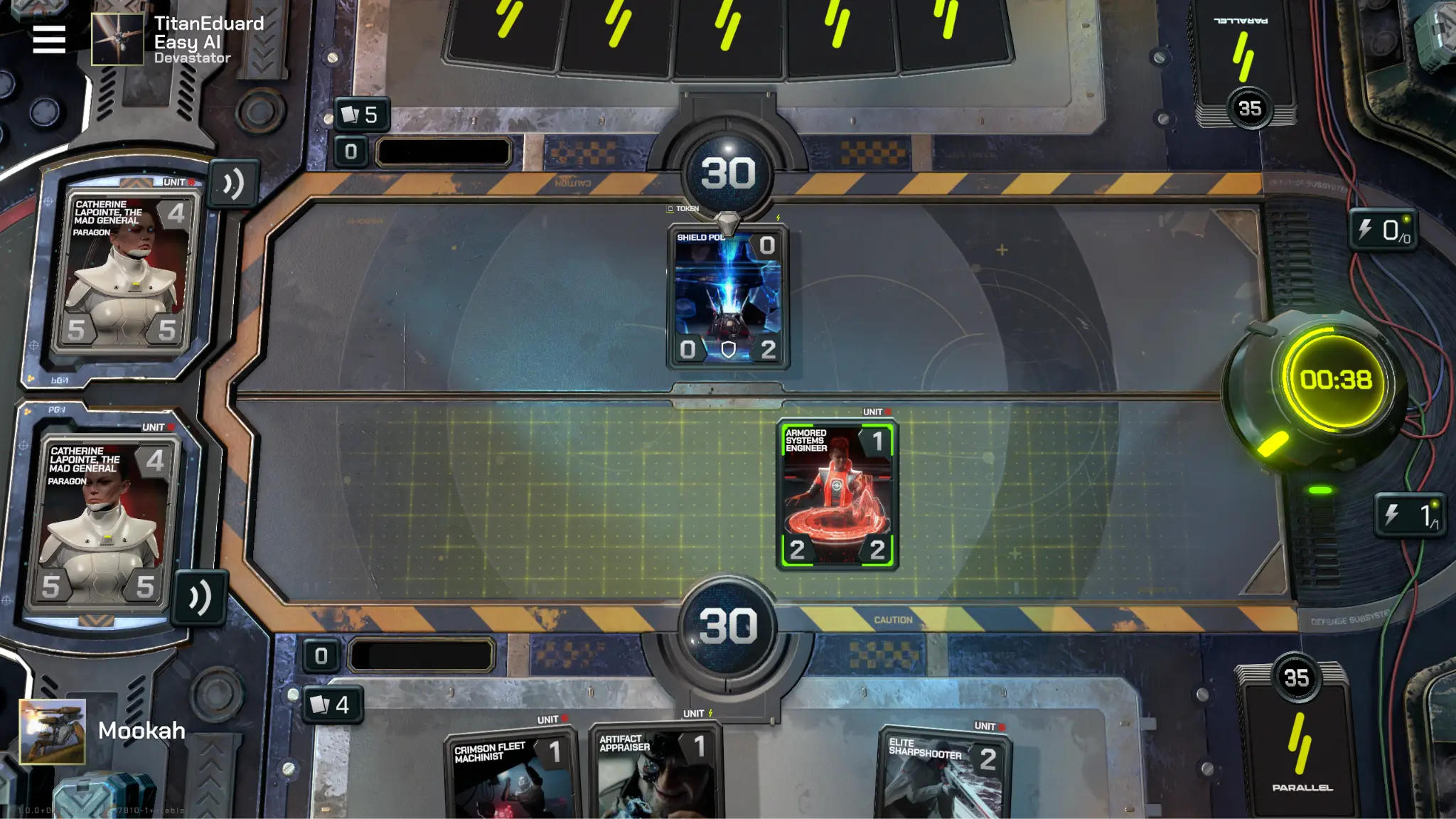
Then, drag the card you want to play onto the Field. When the card lights turn green you can let go and the card will play.
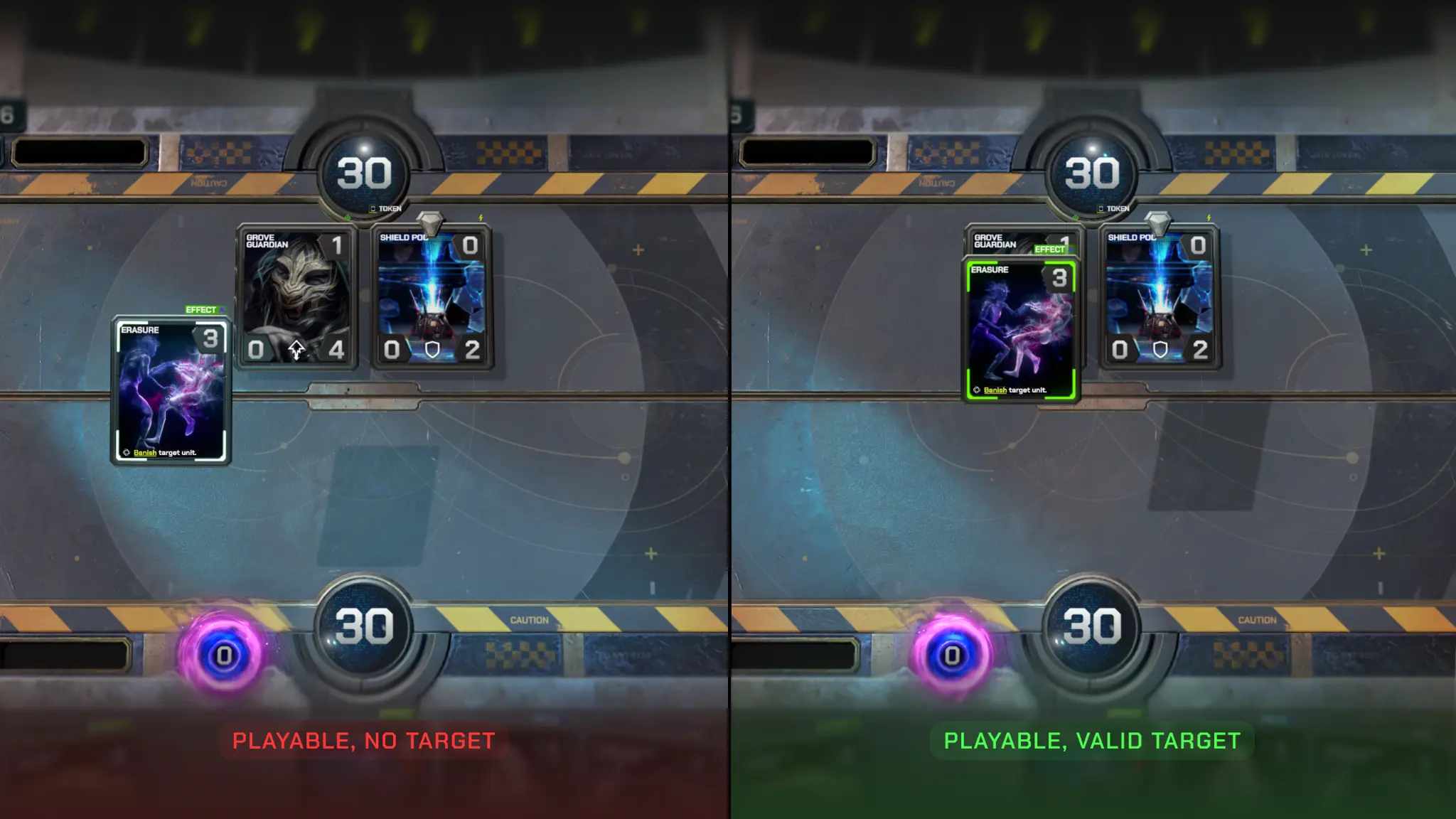
Some cards require a target to be played so even when dragged over the Field, and will only turn green when dragged over a valid target. Cards that require this will include the word “target” in their text.
Combat↩
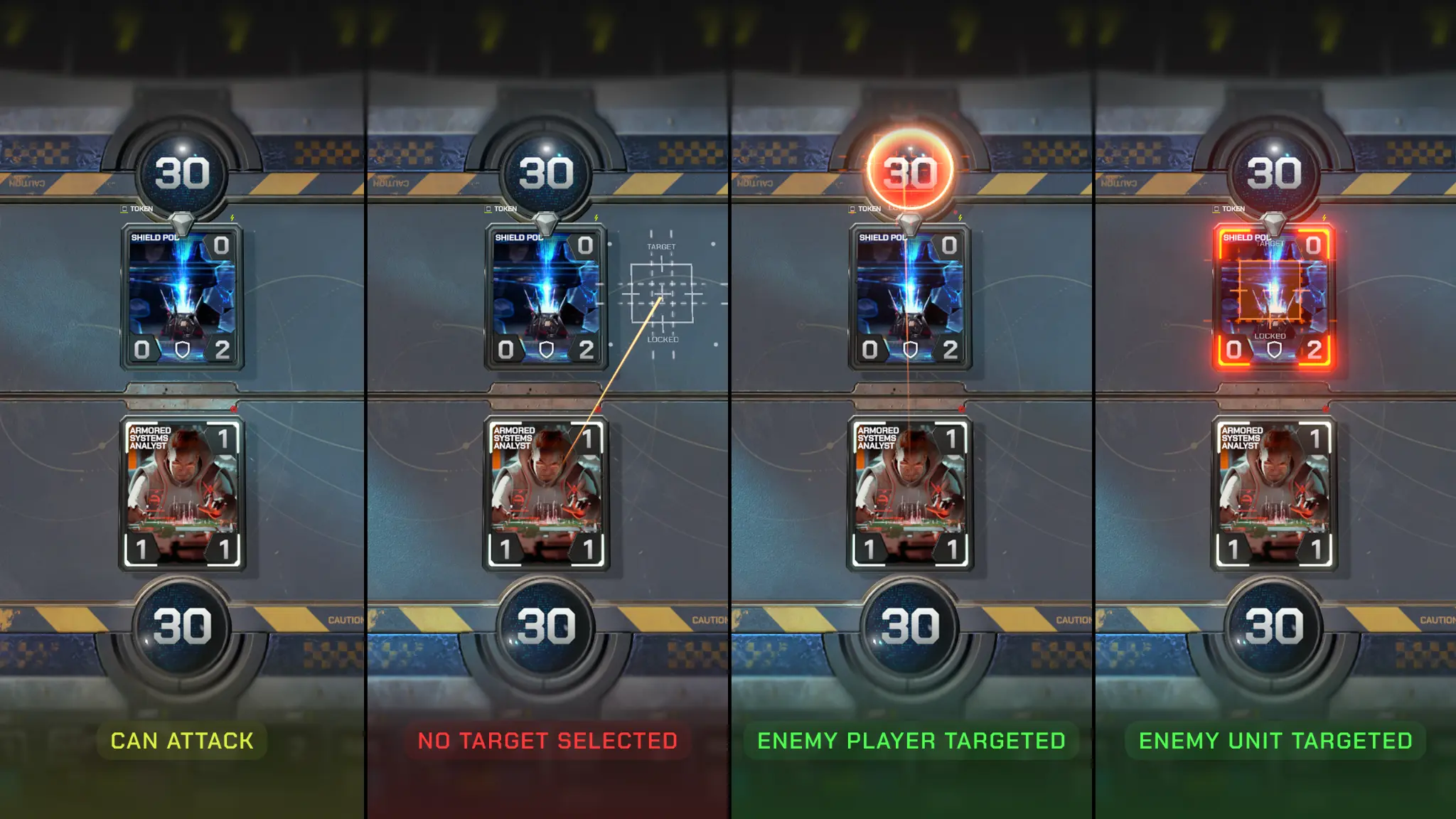
When a Unit can attack, the frame around it is illuminated. Units can’t attack on the turn they are played.
To attack with a Unit, drag from the Unit on the Field to the intended target. Enemy Units and the Enemy Player can be attacked by a Unit on your Field (Friendly Unit). Once you’ve selected an appropriate target, the reticle and target will both turn red. You can then let go and your Unit will attack the target.
When two Units battle, each will deal damage equal to its Attack to the other Unit’s Health. Any Unit whose Health reaches zero, is destroyed. When the Enemy Player is attacked, the Friendly Unit deals its Attack to their Health.
Activating Cards↩
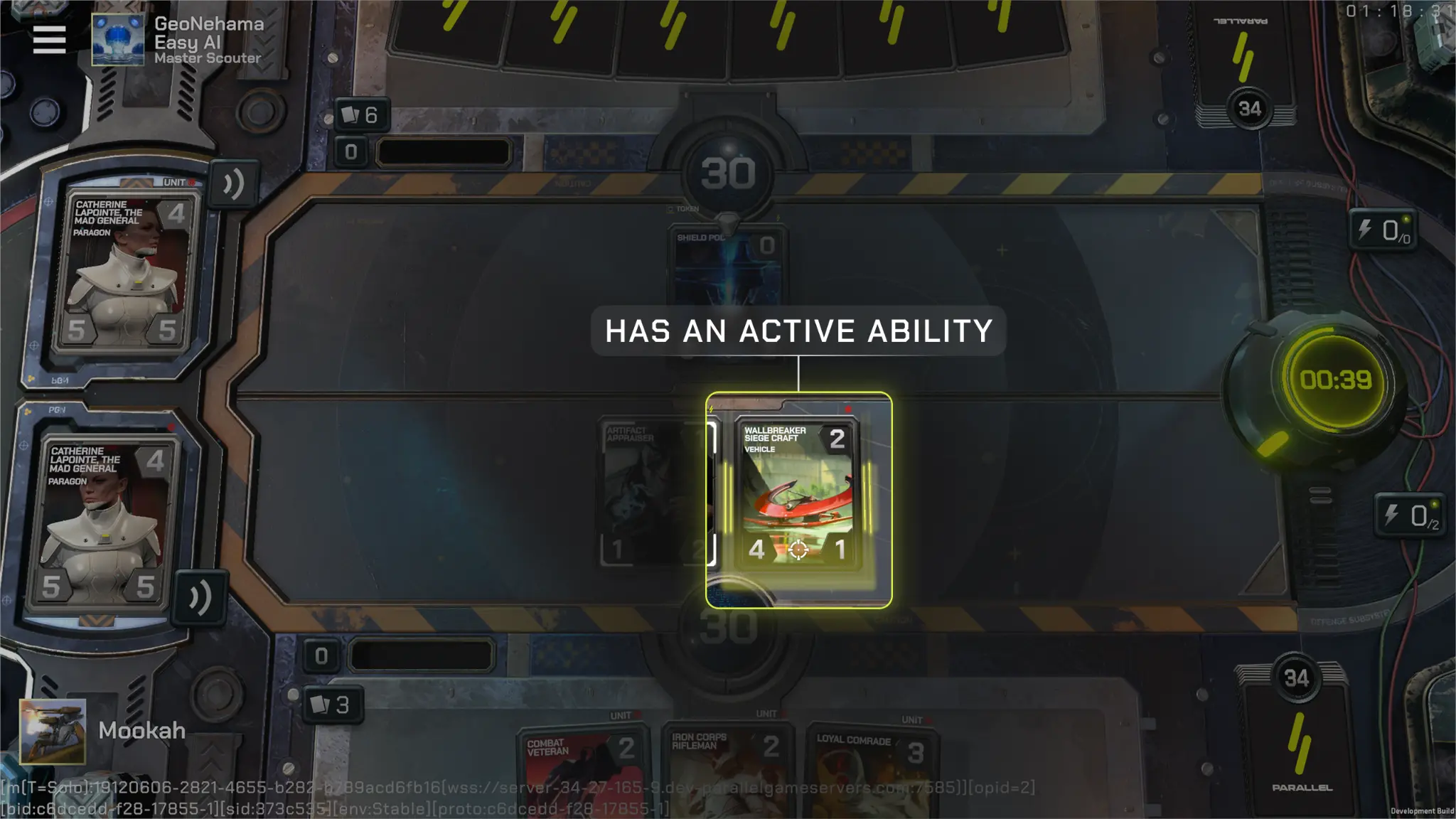
Some units and relics have abilities that can be activated. These cards have their own visual animation to let you know they can be activated.To activate these cards, select them, and then select “ACTIVATE” on the bottom right of your screen. Some cards also have costs associated with activating their ability.
Starting the Game↩
Parallel is played as a 1v1 PvP game. In order to play, select the game mode you’d like to play, then the game will find you an opponent.
Tip: We recommend you start out your Parallel journey by playing the Quickplay game mode after going through the tutorial.
Once you’ve matched with an opponent the game will start.
Both players start the game with 30 Health.
The game randomly determines a starting player.
The second player will have a Shield Pod spawn on their side of the Field. You can learn more about the Shield Pod in Additional Rules.
Both players will draw an initial Hand of 5 cards, then choose which cards to keep and which to redraw. This process is referred to as taking a Mulligan. The player going second has two Mulligans.
Once the Mulligans are completed, the game can start.
Turn Structure↩
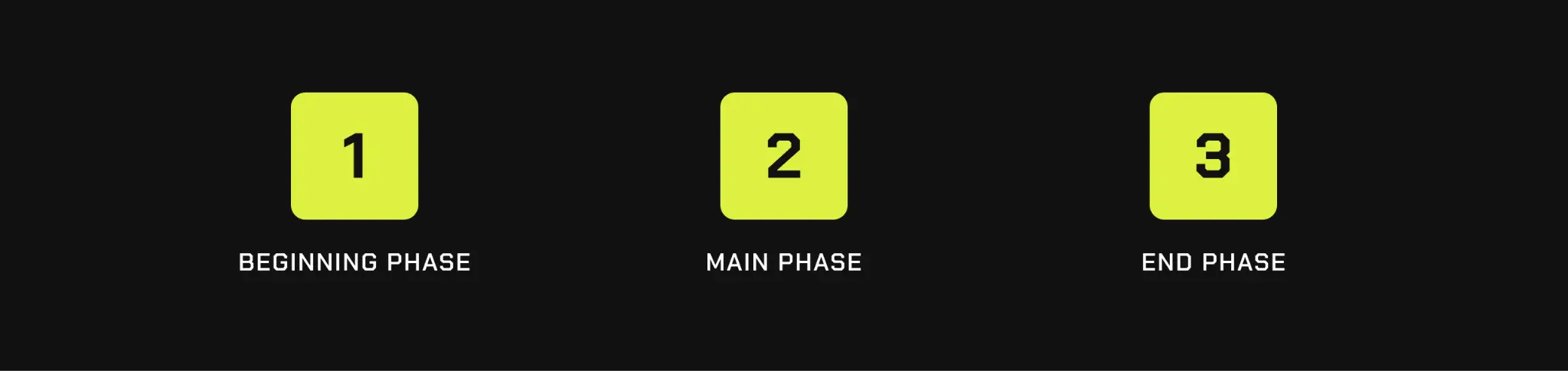
A turn has 3 phases:
Beginning Phase:
This phase occurs at the start of a turn. The following happens during this phase in the order listed below:
- The player whose turn it is (the “active” player) draws a card from the top of their Deck.
- The active player gains Energy equal to the number of cards in their Bank.
- Any abilities that would happen at the start of the turn, trigger.
Main Phase:
This phase takes the majority of a player’s turn. During this phase the active player can take the following actions in any order they choose:
- Bank a card from their Hand and gain an Energy.
- Play any cards from their Hand by utilizing their available Energy.
- Activate abilities of any cards on the Field with an Activate ability.
- Attack Enemy Units or the Enemy Player with Friendly Units.
End Phase:
This phase occurs once a player ends their turn. A turn can end either by pressing the End Turn button or the turn timer running out. The following events occur in the order listed below:
- Any abilities that would happen at the end of the turn, trigger.
- If the active player Banked a card, they will draw a card to their hand.
Additional note: The player going first in a match does not draw a card at the beginning or end of their first turn (even if they Bank a card).
How to Win a Match↩
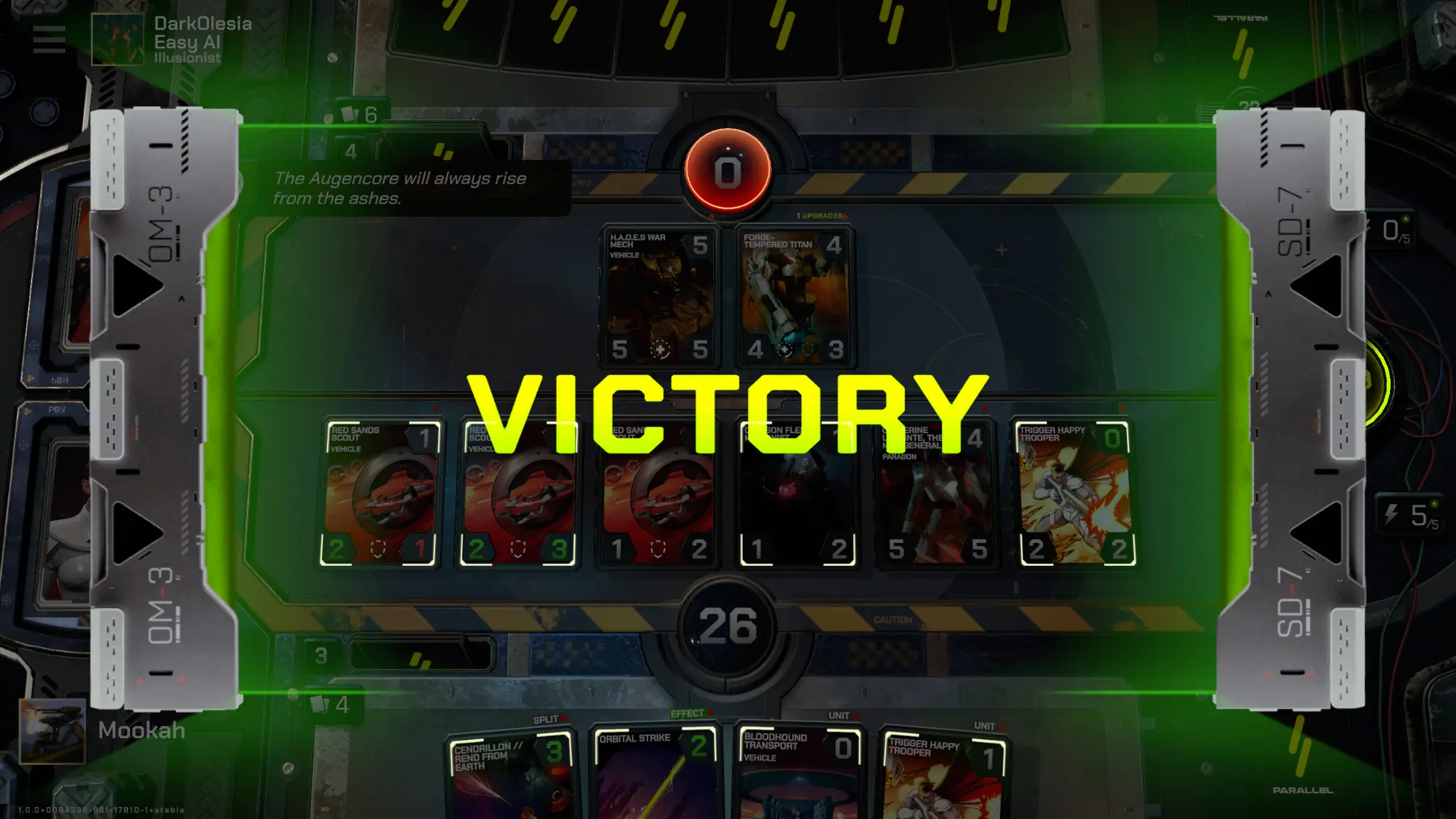
You win a match by reducing the Enemy Player’s Health to 0, or if the Enemy Player concedes. If both players reach 0 Health within the same interaction, the game ends in a draw.
Creating Your Own Deck↩
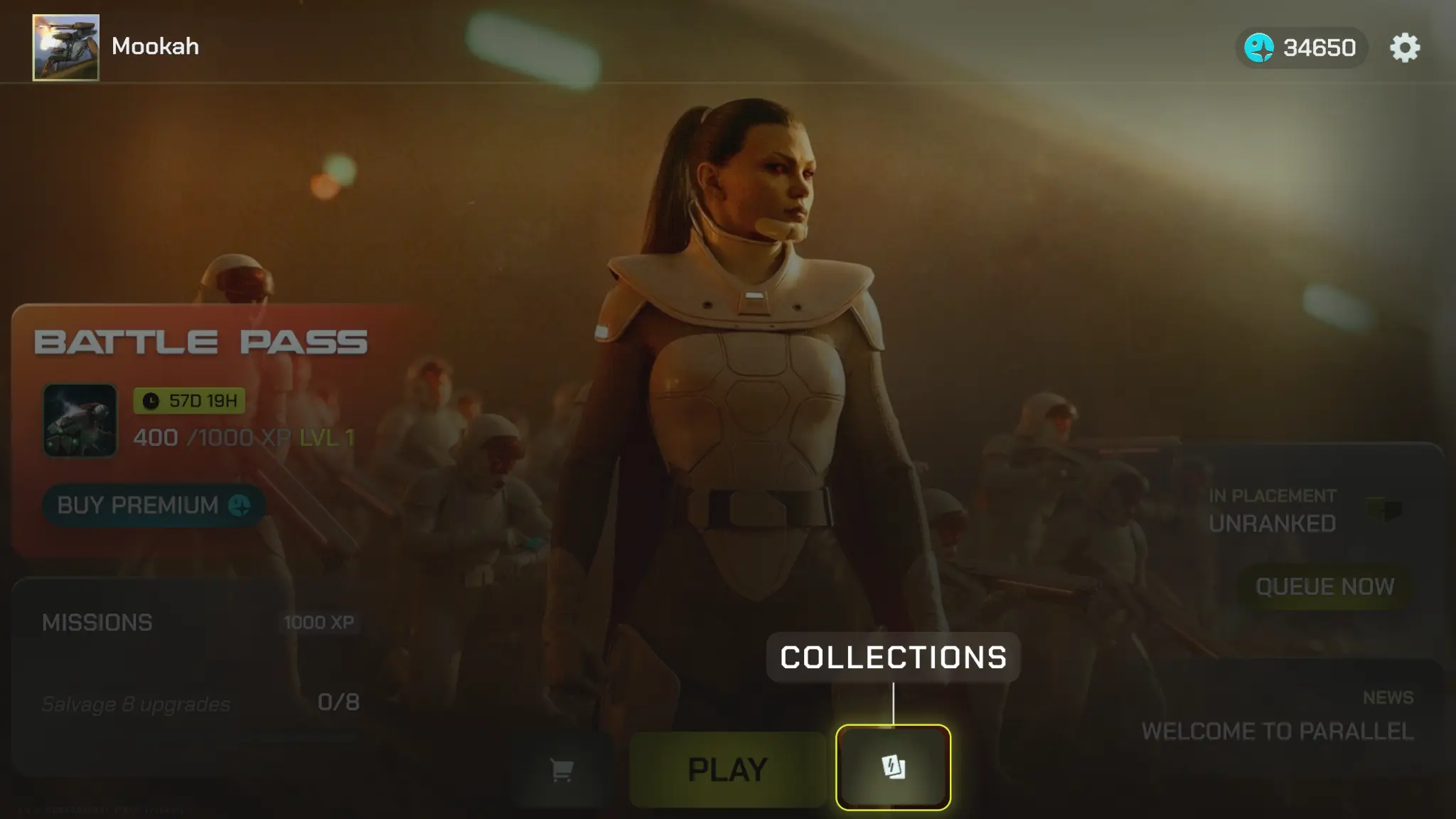
To create a deck, go to the Collections section from the Main Menu then go to the Decks tab.
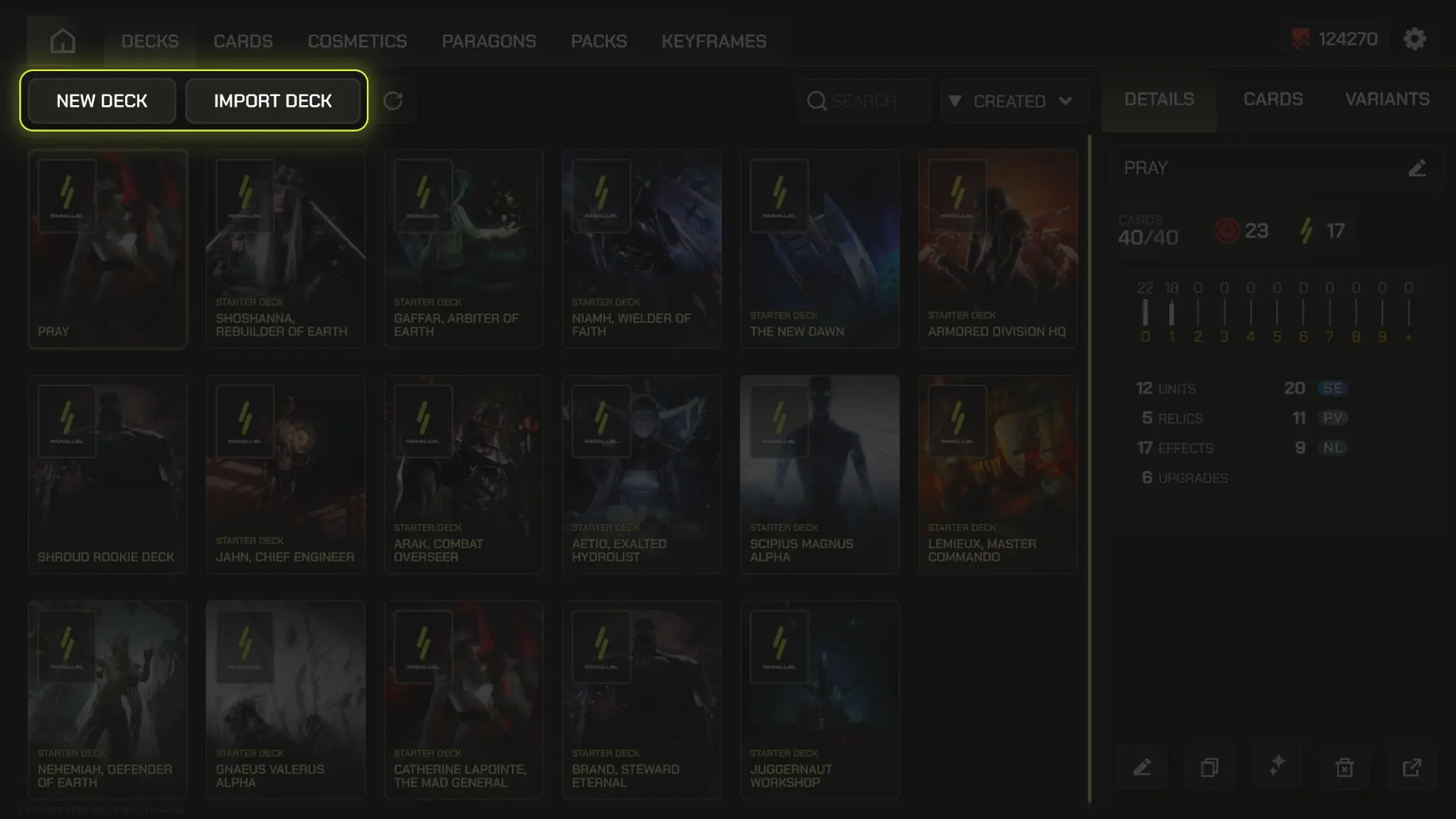
From the Decks tab you can choose to create a New Deck or Import a deck code. You can get deck codes from other players to copy and paste into the game, but you must have all the cards within the imported deck to be able to play with it. You’ll have to name your deck in order to proceed.
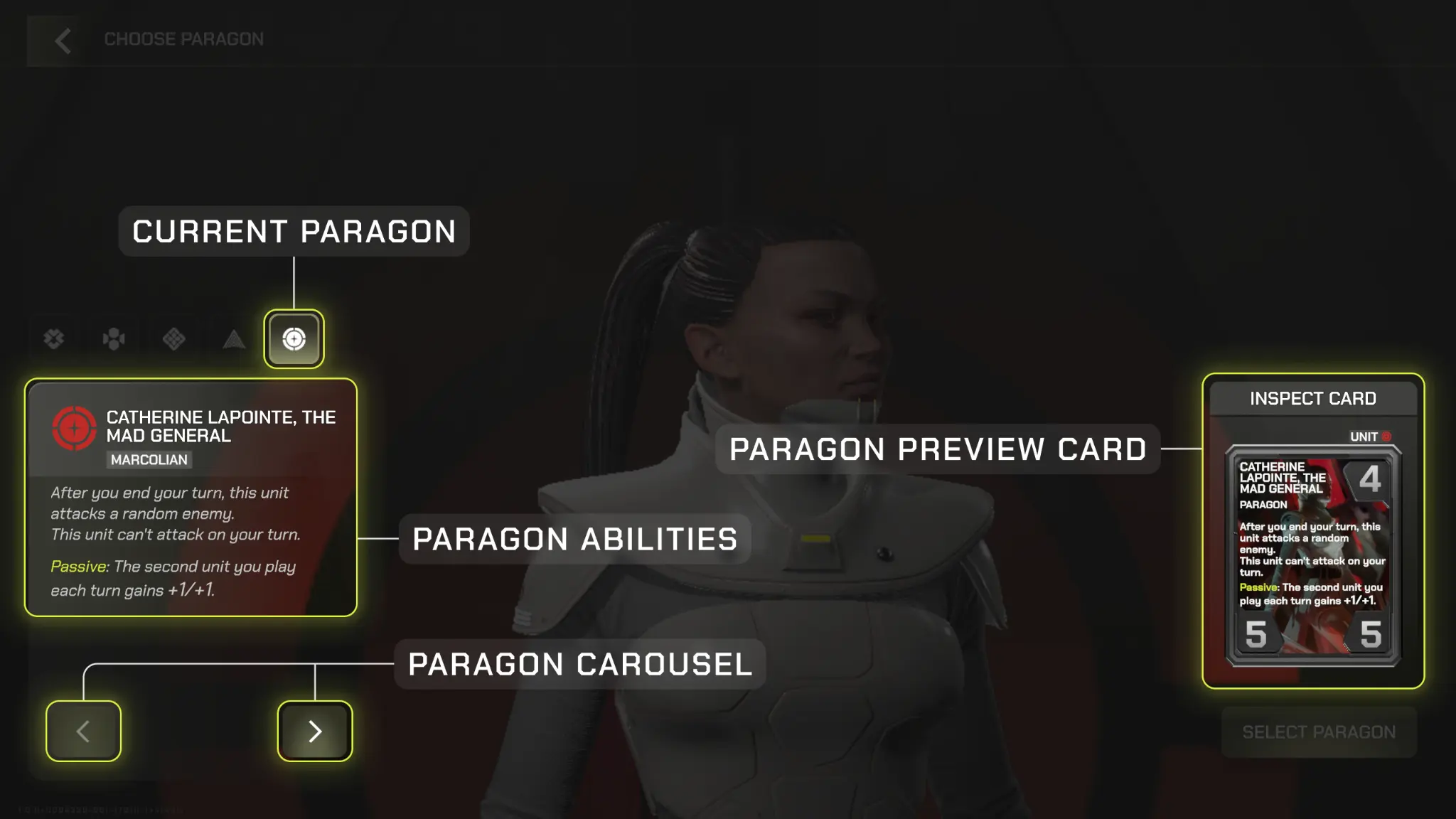
Once you’ve named your deck you must select your Paragon. You can swap through the different Parallels and their associated Paragons on this screen. Once you are happy with your choice, press “Select Paragon”.
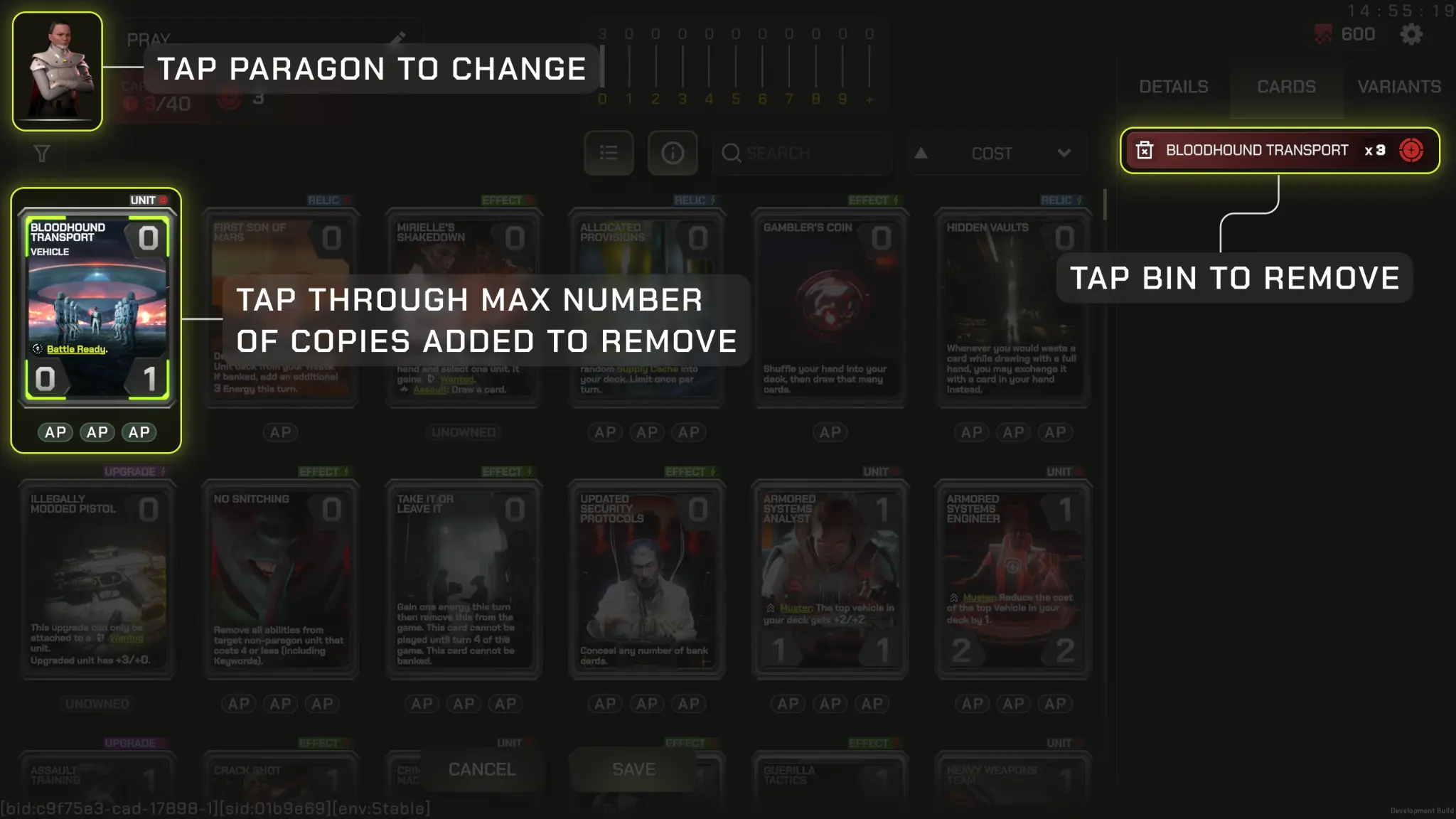
From here you enter the deck editing screen. To add cards to your deck, tap on the card and it will be added (visible in the Cards section of the Details Side Panel and under the specific card). Multiple taps of the same card will add multiple copies to your deck. Decks must contain exactly 40 cards. Decks can include cards from your chosen Paragon’s Parallel and Universal cards. Up to 3 copies of a card are allowed, except for Legendary cards, which are each limited to 1 copy per deck.
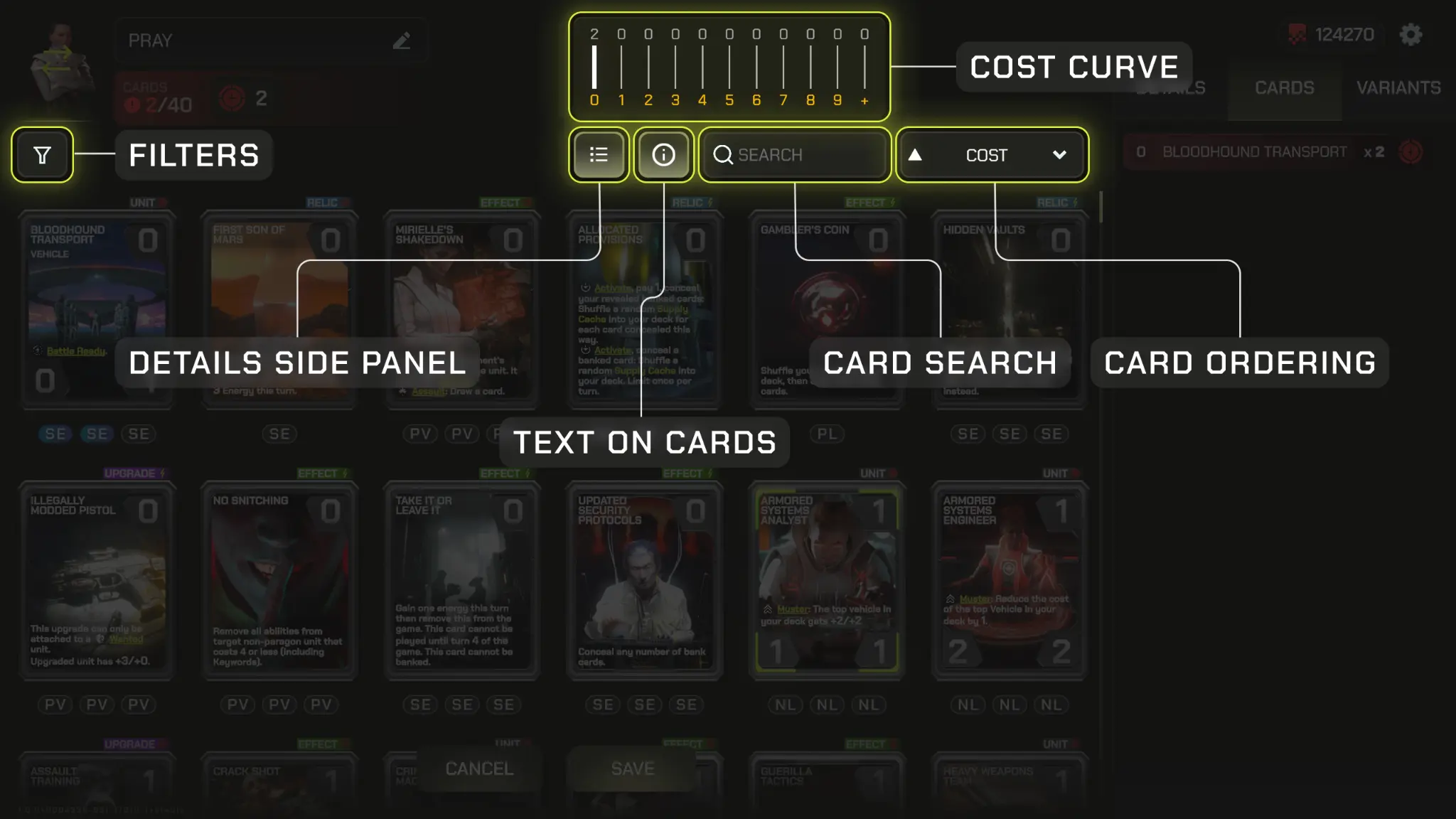
To remove cards from your deck, tap to add cards until you’ve added the maximum number, then tap again. The next tap after you’ve reached the maximum number of copies allowed in a deck will reset it to zero copies in your deck. If you are on PC you can mouseover the card on the Details Side Panel and select the trash icon that appears.
To change your Paragon, you can tap on your currently selected Paragon on the top left and you’ll be brought back to the Paragon Selection screen.
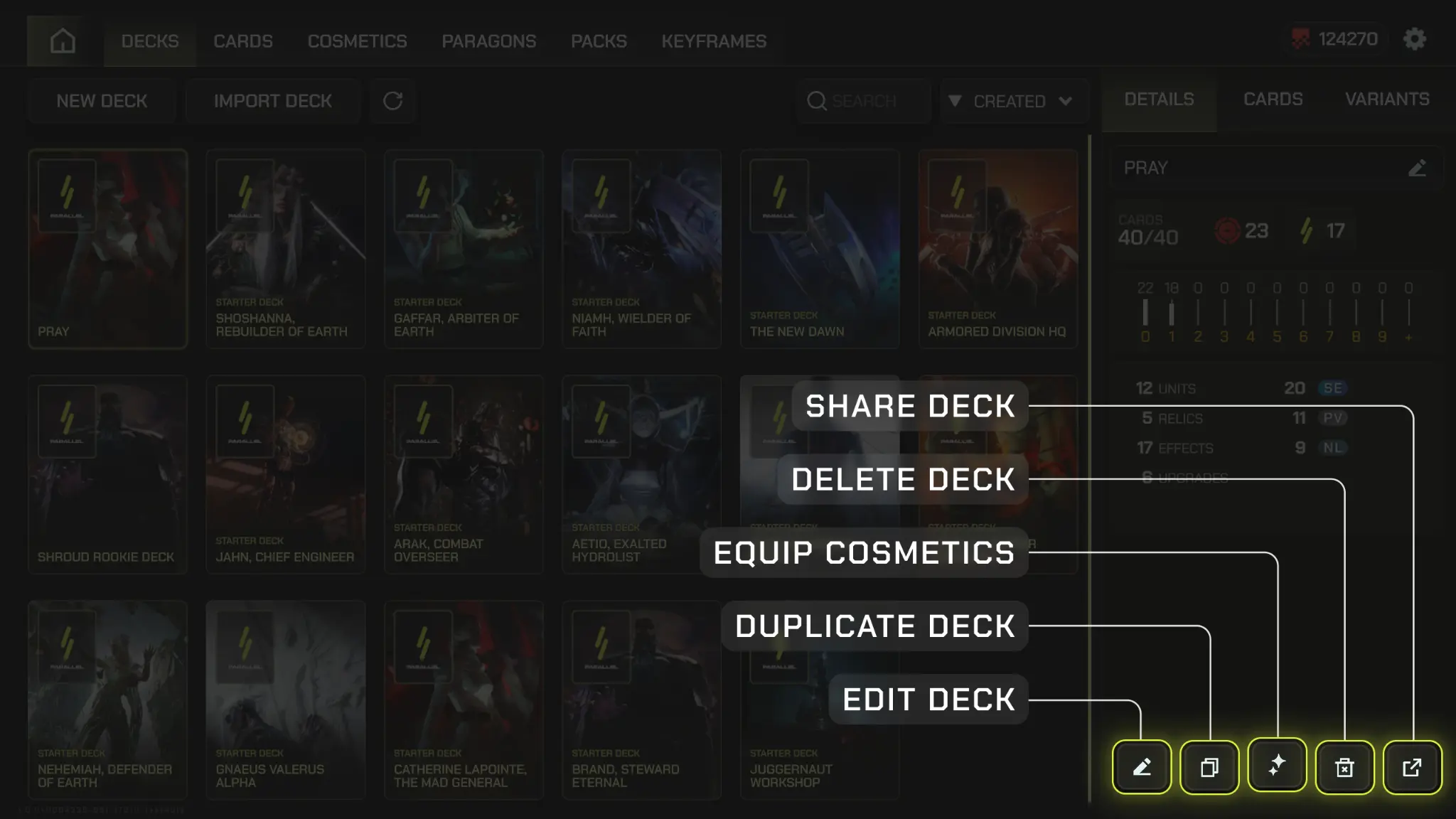
Once you’ve assembled your 40 card deck, press Save and you can now use your deck in our different queues. Within the Decks tab of the Collection page, you can also manage your decks in various ways.
- Edit Deck: Lets you go back to the deck editor and edit that specific deck.
- Duplicate Deck: Creates an exact copy of your deck.
- Equip Cosmetics: Allows you to assign cosmetics to each specific deck, such as Card Backs. Card Backs are cosmetics that display behind your cards in a game.
- Delete Deck: Removes this deck from your Collection.
- Share Deck: Generates a code that you can share with others, which they can then import into their Collection.
Increasing Your Collection↩
You can gain more cards through four primary methods: The Quickplay game mode, Battle Pass, Purchasing Packs and Crafting.
Quickplay↩
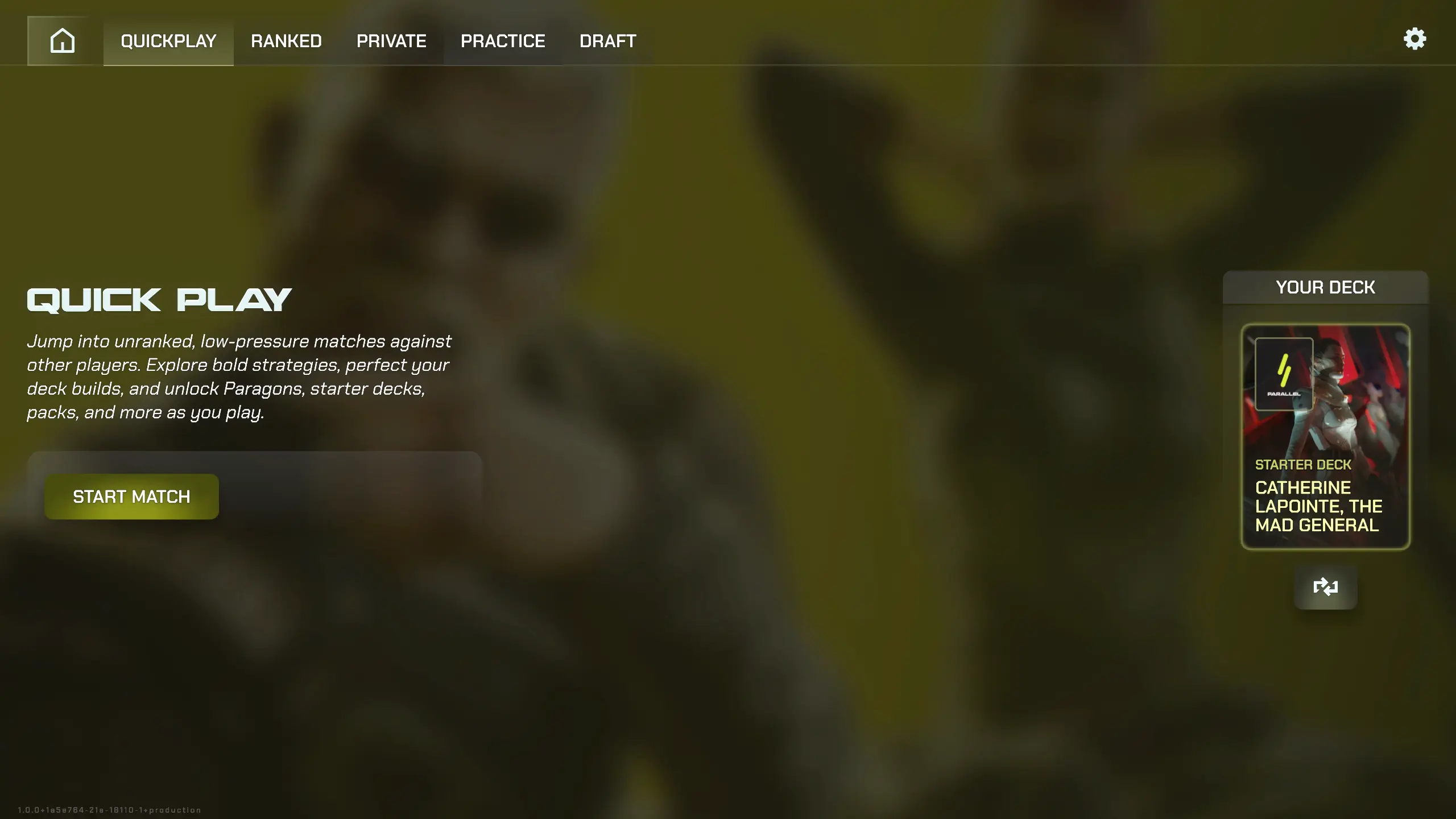
The Quickplay game mode is where any new player should start in Parallel. The first 14 matches reward players with Starter Decks to help them get started. The first 30 wins in Quickplay reward players with an assortment of packs, rare cards, and legendary cards. There are also rewards for winning at 40 wins, 50 wins, and 100 wins within Quickplay.
Battle Pass↩
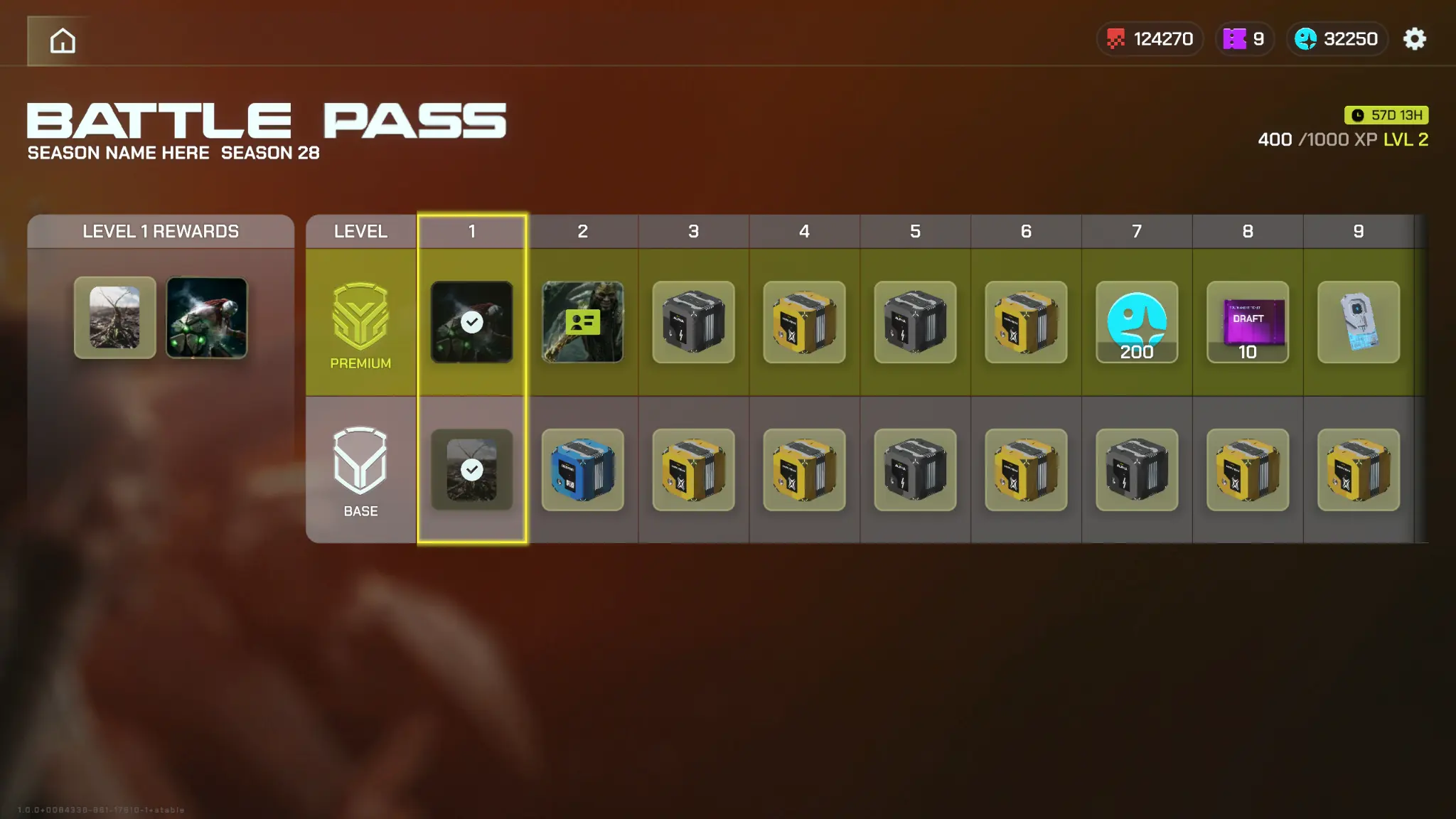
The Battle Pass is the primary way to gain cards through gameplay progression. As you complete missions given to you daily, you will gain XP towards the Battle Pass. Every level of the Battle Pass yields rewards, with additional rewards available if you purchase the Premium Battle Pass. Rewards include the specific monthly Battle Pass card and various card packs.
Purchasing Packs↩
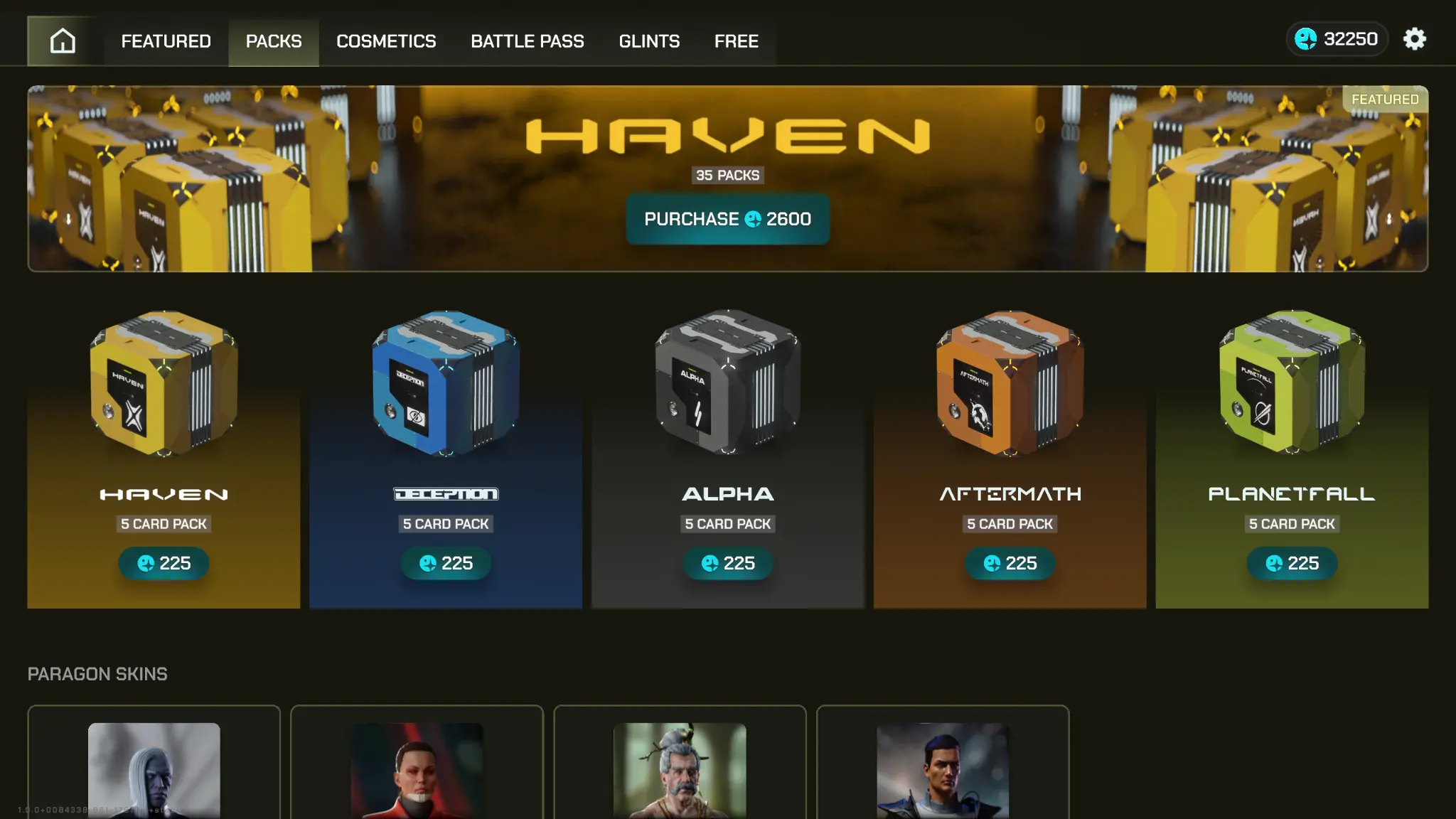
All expansion packs can be purchased in our store. Each pack has 5-cards.
Crafting↩
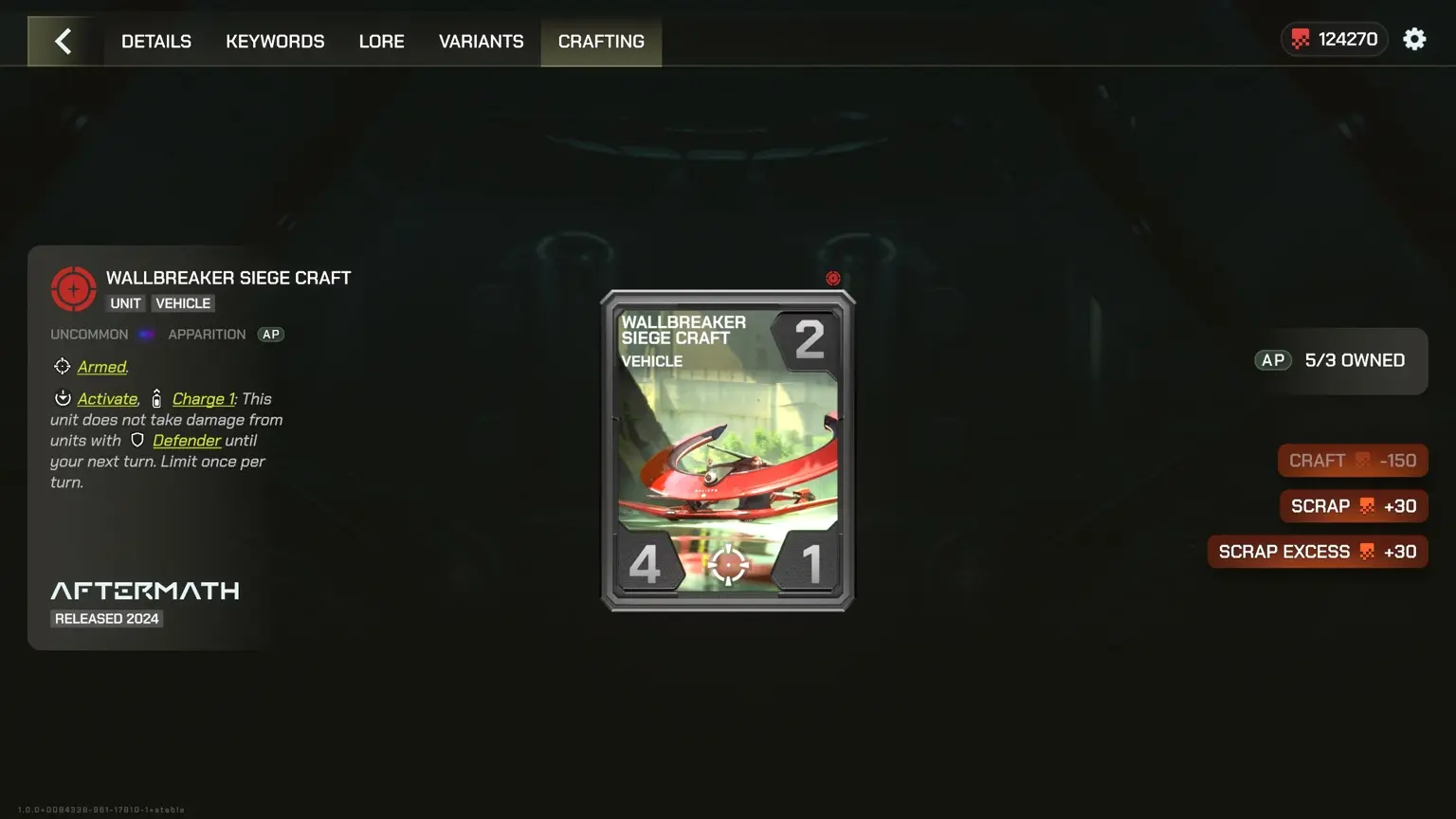
As you earn card packs and grow your collection, you may want specific cards for your decks. You can target and attain these cards using the Crafting system. The Crafting system relies on the Scraps resource. You can gain Scrapts by Scrapping your cards. To Scrap a card, full-inspect it (press and hold on mobile and right click on PC), then go to the Crafting tab. In the Crafting tab you can Scrap cards and gain a certain amount of Scraps based on the card’s rarity. You can also Craft cards in this tab with the amount of Scraps required being dependent on the card’s rarity as well.
Additional Note: Cards from starter decks can’t be Scrapped.
Game Terminology Glossary↩
- Attach
- To connect one card with another as long as they remain on the Field.
- Conceal
- To hide the identity of a card from the Enemy Player. Cards in your Hand, Bank, and Deck are concealed by default.
- Counter
- A counter is an object placed adjacent to a card to track information.
- Destroy
- Units are destroyed when they reach 0 Health through damage taken in battle or damaging card abilities. Card abilities can also destroy cards outright. Destroyed cards are sent to the Waste (also known as Wasted).
- Enemy
- The opponent (Enemy Player) or any cards controlled by them.
- Friendly
- You or any of your cards.
- Mistmatch
- A card that is in the possession or control of a player who is not its Owner.
- Owner
- The player who started a game with a card in their deck or created a card during a game.
- Play
- To use a card by dragging it over the Field and paying its costs . Generally, cards are played from your Hand. Paragon cards can also be played from their zone. Units, Upgrades, and Relics go to the Field when played. Effects resolve and then go to the Waste. Some card abilities may allow you to play cards from other zones.
- Put
- When a card is moved from one place to another. A card that is put into a location is not considered to have arrived there through any other keyword or game mechanic that moves cards to that same location.
- Remove from the game
- Objects removed from the game cease to exist entirely from the match.
- Target
- To choose a desired card or player to be affected by an ability that’s asking for a target.
- Token
- Tokens are cards or game materials that did not start in your Deck but are created through various game abilities.
- Transform
- To turn one card into a completely different card.
- Waste
- To put a card into the Waste zone.
Keywords and Mechanics Glossary↩

Activate
These abilities are used on your turn by selecting the card that has the Activate ability, pressing the “ACTIVATE” button, and then paying the ability cost if there is one. You may use an Activate ability any number of times on your turn unless specified otherwise.

Aftermath
Any ability directly following this keyword will trigger when this Unit is Wasted.

Armed
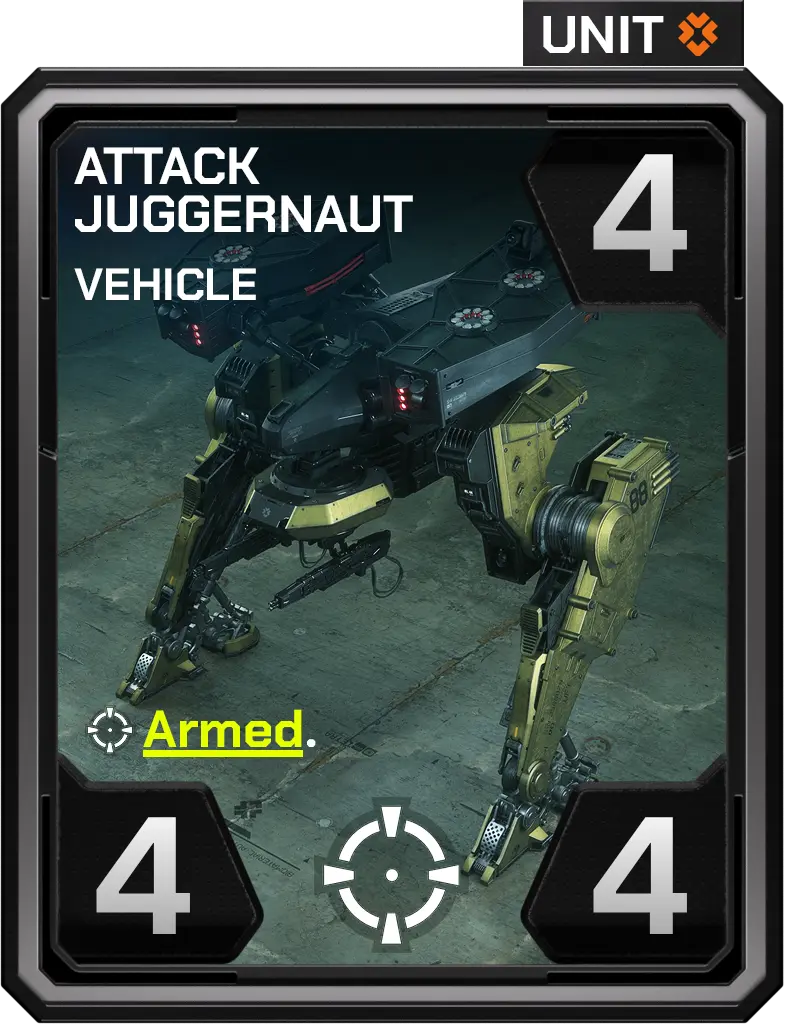
While attacking, this Unit deals its damage first unless the other Unit also has Armed.

Assault
Any ability directly following this keyword will trigger when the card is played while the Enemy Player has already lost health this turn. Some Assault abilities adjust how Muster abilities resolve.

Attuned
At the start of your turn, this Unit toggles between its Dormant and Awakened states.

Banish
Send a card to the Singularity of the player who caused the interaction. Banished cards are not destroyed and do not trigger Aftermath or “On Destroy” abilities.

Battle Ready
This Unit can attack the same turn it enters the Field.

Blitz
This Unit can attack Enemy Units the same turn it enters the Field.
Charge
Reveal cards from your Bank equal to the number following it as a requirement for an ability. This keyword may have a card type written before it as an additional requirement for the cards being revealed. Multi-Charges have a quantity requirement for revealing, but their abilities scale with the amount of cards revealed.
Corrupted
Requires that the energy cost be paid in health too when played.
Decay
At the beginning of the owner's turn, this Unit and Units adjacent to it take 1 damage.

Defender
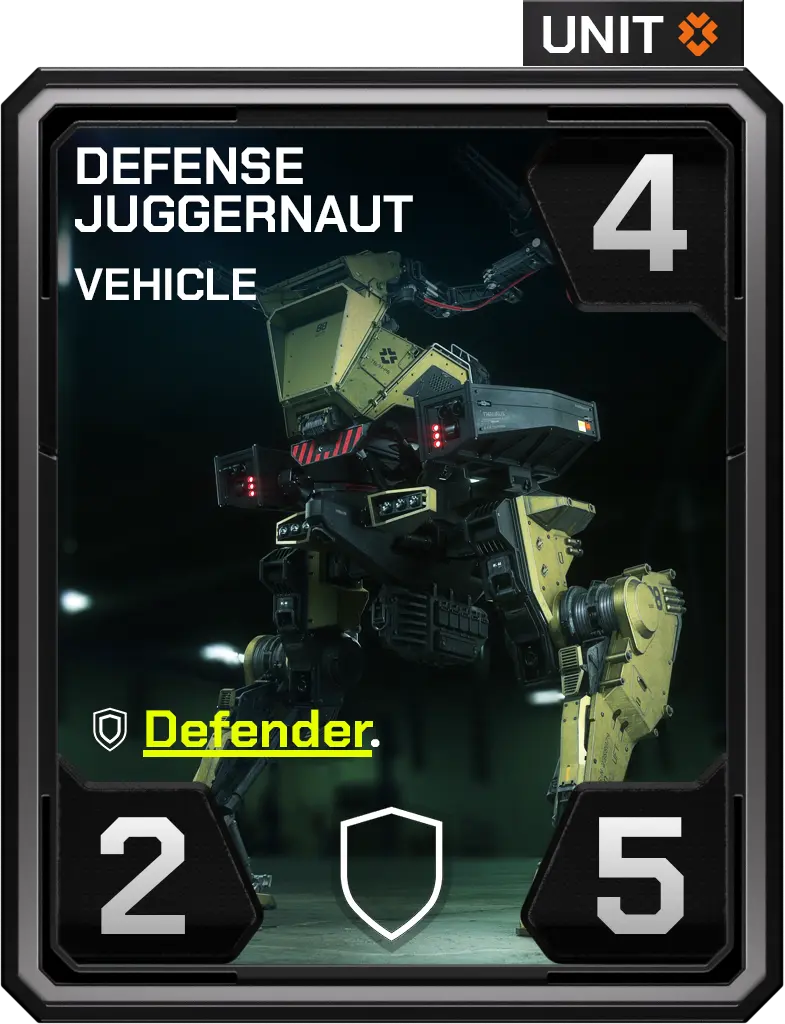
This Unit may block (or intercept) attacks and battle rather than the intended target.

Evasive
This Unit’s attacks may not be blocked by Units with Defender.

Favor
Favor is a secondary resource available to players. Once Favor is gained, the tracker will display the players’ Favor balance alongside the Energy tracker. You can directly spend Favor by selecting the Favor tracker. Spending Favor allows the player to add or remove Wanted from a Unit, or Stun a Wanted Unit. Some cards can also spend Favor for additional abilities.
Flourish
Any ability directly following this keyword will trigger when this Unit is healed over its maximum health.

Kickback
An optional ability tied to a card that also gives the Enemy Player a bonus.
Lethal
Any damage this Unit deals will destroy Enemy Units.

Muster
Any ability directly following this keyword will trigger when this Unit is played.

Overclock
This Unit may be played by spending up to two extra energy. If one is paid, randomly attach an Upgrade to this Unit. If two energy is paid, look at two randomly generated Upgrade choices and choose one to attach to this Unit.

Pacifist
This Unit may not attack.

Recruit Mob X
Create a Mob token and give it attack and health equal to X. If you already have your own Mob token, add X to its attack and health.
Relentless
This Unit can attack an additional time each turn.

Retaliate
Any ability directly following this keyword will trigger whenever this Unit takes damage. Health granted this way will not save a Unit from being Wasted.

Salvage X
When this Unit is Wasted or Banished, move up to X of its attached Upgrades to other Friendly Units.

Shielded
This Unit is immune to the next Enemy Effect that targets it. The Unit can still be affected by Enemy Effects that randomly target or affect multiple units.

Stealth
This Unit can’t be targeted or attacked by the Enemy until it attacks.

Stun
A stunned Unit cannot attack, defend, or activate any abilities until the end of its controller’s next turn.

Wanted
A keyword that marks a Unit. Certain abilities refer or affect Wanted Units.

Withdraw
This card may be played from the Bank by paying its Withdraw cost.
The Parallels↩

Augencore↩
Lore
Launching themselves deep into the cold silence of space, the Augencore survived the Exodus by shedding their organic limitations and augmenting their bodies with advanced cybernetics. For thousands of years, they found innovative ways to shape their bodies and adapt themselves into perfect machines, hardened by the unforgiving void.
The mighty CAINE-1, a foundry ship of incomparable size, proudly soars through the asteroid belt, acting as the home of the Augencore. For centuries, the ancient core engine of their ship has served as the beating heart of their society; a center of power for their ever-expanding civilization. CAINE-1’s impressive size can be attributed to the Augencore's unwavering commitment to maintaining and upgrading their magnificent home. The ship is more than just their home; it's a statement of their power and a symbol of their technological mastery and relentless pursuit of progress.
Augencore society is arranged by a giant collective of industrial divisions, all of which are overseen by The Commission. The collective includes four categories: Resources, Production, Augmentation, and Defense. All workers and civilians fall under one of these four divisions, proof that the Augencore rely on structured production lines to thrive.
Inside the Resources division, you will find Salvagers, Miners, Farmers, and Logistics. Within the Production division are the Foremen, Engineers, Refinery Workers, and Fabricators. Inside the Augmentation division includes the Surgeons, Technicians, Integrators, and Distributors. Lastly, inside the Defense division are the Fireteam Leaders, Mech Pilots, Ship Pilots, and Troopers.
Roaming the outer limits of the solar system for thousands of years, the CAINE-1 now faces a perilous fate. The engine that brought forth the Augencore way of life is slowly dying, and the window to find a reliable energy source is quickly closing. This has created a rift between leaders within The Commission, and with an entire civilization hanging in the balance, their search for energy is bringing them right back to Earth.
Playstyle
The Augencore lean heavily on advanced mechanical technology and Unit modifications by leveraging powerful Upgrades. They can blow their adversaries away massive mech warriors or send in specially modified operatives to take out key targets with precision. They can pass upgrades between each other with their exclusive Salvage Keyword ability.
Thanks to a mastery of robotics and weapon enhancements, the Augencore are for those players who enjoy devising a strategy and over the course of a game building up to a grand execution.
Paragons
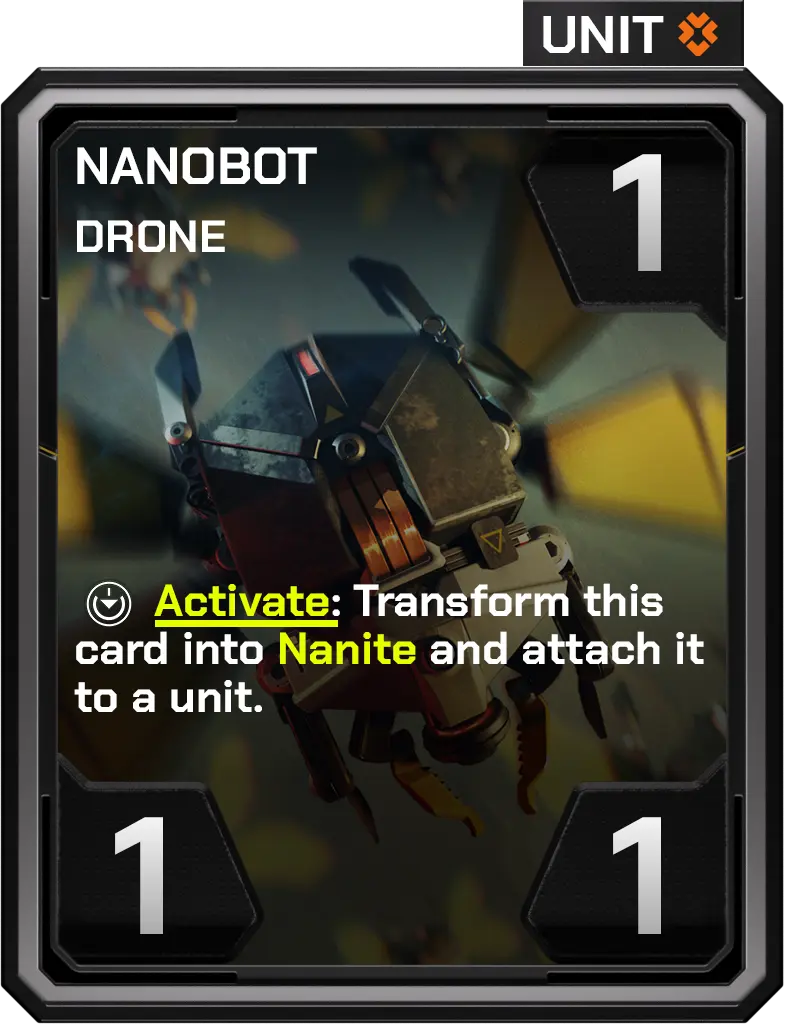
Arak, Combat Overseer: Known for his obsession with warfare and lust for combat, Arak is the unforgiving military leader of the Augencore. He relishes every opportunity to swarm his foes with Nanobots.
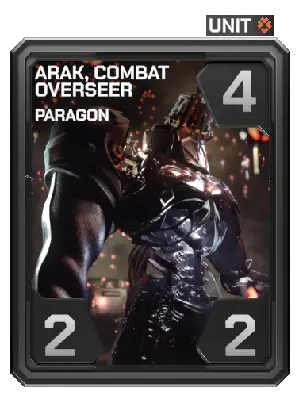
Paragon Passive:
Friendly upgraded non-token units have "Aftermath: Create a 1/1 Nanobot."
Paragon Active:
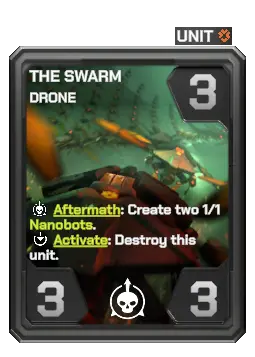
Muster: create The Swarm.
Jahn, Chief Engineer: The Augencore’s elder statesman is a master of upgrade technology, and energy conservation. He’s estimated to be nearly a thousand years old, earning him respect as the reliable, steadfast captain of CAINE-1. As the battle for Earth begins, Jahn remains focused on seeking a cure for his dying ship and salvaging his people.
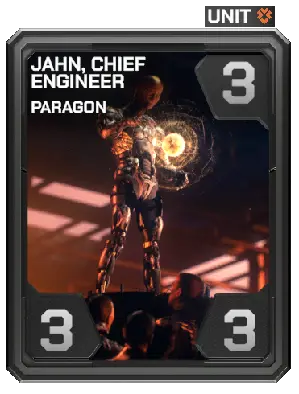
Paragon Passive:
Friendly non-token units gain Salvage 1. The first time a friendly upgrade is sent to the waste before your next turn, draw a card.
Paragon Active:
Activate: You may play upgrades from your waste and bank. Those upgrades enter the field with "If this would enter the waste, remove it from the game instead." Limit twice per turn.
Juggernaut Workshop: Relentlessly devoted to producing their massive and modular machines, the Workshop remains the key to success for CAINE-1’s survival. Their dedication to mass assembly and efficiency keeps the Augencore powerhouse moving full steam ahead.
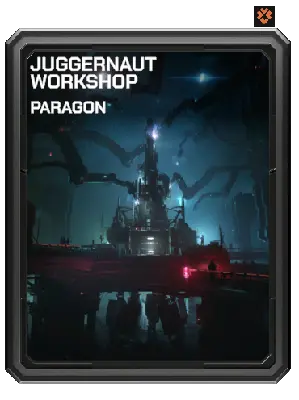
Paragon Passive:
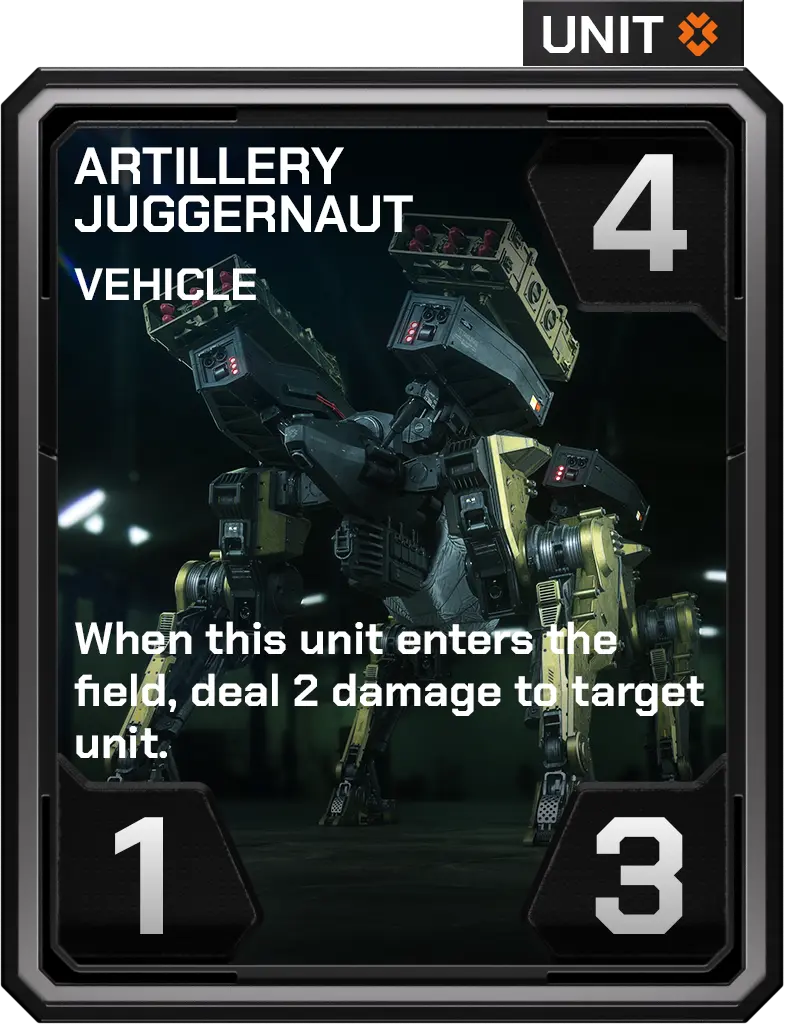
Juggernaut Workshop starts the game with 4 counters. At the end of your turn, remove 1 counter. After the last counter is removed, choose and create a Juggernaut and add 3 counters to Juggernaut Workshop.
Paragon Active:
This Paragon cannot be played to the field.
Earthen↩
Lore
When the Cataclysm erased all forms of life on the planet, some chose their fate and soared skyward during the Exodus. Others refused to leave and chose to burrow beneath Terra Firma to stay alive. The Earthen are those who stayed behind.
Over time, the survivors found their way back together, choosing peace over fighting due to their desire for preserving the planet. Reunited and pushed to the brink of extinction, the Earthen persevered and rejuvenated an ancient bond with nature. Behind the incredible strength and fortitude of the original Nehemiah, the Earthen people reclaimed the surface and were able to rebuild. With the battle for Earth now looming, they are dedicated to defending their precious home at any cost.
Nestled among majestic mountains, Primea is the lifeblood of the Earthen people. The Tree of Nehemiah, standing tall and proud at the heart of the city, embodies the deep-rooted connection its inhabitants have with the Earth. The groves that surround the city walls have the power to heal, revive, and flourish the surrounding flora and fauna.
Inside the walls, the Primeans possess an innate bond with the planet and play a crucial role in safeguarding its well-being. With defending Nehemiah’s sacred groves at the core of its design, the city is regarded as a mecca for Earth’s most dedicated protectors. Primea welcomes all who seek to immerse themselves in its wonder and want to safeguard it for future generations.
The Earthen people are composed of different tribes that have migrated across the planet over the centuries. From the deep Shaymak caves to the sky-high Arrisah, and from the Horahi all the way to the mountains of Mizrakadesh, the Earthen tribes have their own cultures, mythologies, and leaders. But together, they have developed a formidable planetary defense system.
This system includes the Mycelial Network Remote Terminal (MNRT), which acts as a global private communication device. Using receivers that are often designed as cherished pieces of jewelry, like necklaces or bracelets, the MNRT bonds with the user’s nervous system, giving them the ability to manipulate organic matter and relay messages that are unseen and unheard. It’s just one of many unique technologies the Earthen use to defend their home.
Playstyle
The Earthen rely on raw power and synergies to win battles. They have access to exceptionally strong Units that can change the face of the battlefield by being immovable walls, utilizing advanced healing, and dealing damage on a moment’s notice. On top of that they have access to strong Keywords like Pacify and Decay to destabilise their enemies. They exist not for their individual power, but for the power and preservation of their planet.
Fighting with an unstoppable resilience, the Earthen are for those players who enjoy utilizing powerful Units, being proactive threats, and dealing bursts of damage.
Paragons
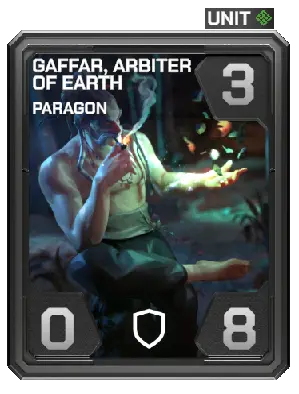
Gaffar, Arbiter of Earth: Gaffar is the Earthen’s peaceful protector and charismatic leader. He stands as the ultimate stabilizing force, forever steadfast in the battle for the planet. He always chooses the pipe before the blade, but even he can be provoked when Earth is threatened.
Paragon Passive:
After one or more units gain Pacifist, friendly units gain +1/+1.
Paragon Active:
Pacifist, Defender
Whenever this takes combat damage, it gains +1/+0.
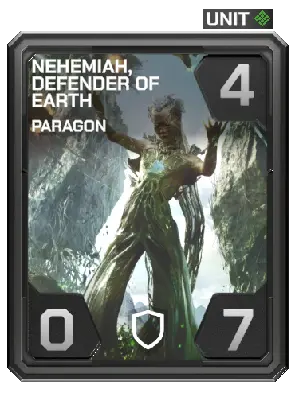
Nehemiah, Defender of Earth: Hell hath no fury like a woman scorned, and Nehemiah is ready to take up arms against anyone who threatens mother Earth. She’s the latest prodigy in a proud line of her namesake, leading all the way back to the original Nehemiah, the one who freed the Earthen people from their dreary subterranean refuge.
Paragon Passive:
After the first friendly unit with Defender is destroyed each turn, target friendly unit gains Defender.
Paragon Active:
Defender
Friendly units with Defender have attack equal to their current health.
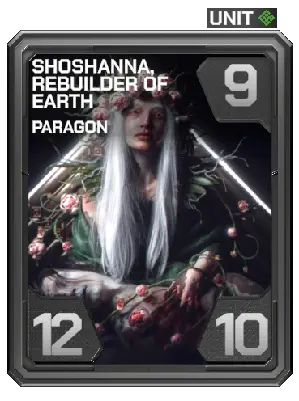
Shoshanna, Rebuilder of Earth: Leaning heavily on her kind and generous nature, Shoshanna is the approachable and diplomatic leader of the Earthen. She brings healing and revitalizing energy to her followers and offers them protection within Primea’s walls.
Paragon Passive:
Your maximum and starting health are 40.
Paragon Active:
Muster: Set your health to 30.
Kathari↩
Lore
Beneath Europa's ice-crusted surface, the Kathari have bio-engineered themselves to survive where no other human could. Despite the impossible odds of surviving the trip from Earth to Jupiter’s gloomy moon, the ingenious scientists broke barriers by finding new methods of cloning and genetic refinement. Over time, this allowed them to sculpt a society with precision, unity, and neurological mastery. What began as an extreme stab at survival became a relentless push for rapid evolution.
Once the original Kathari people reached Europa, they knew their only chance to survive the frozen surface was to use their ship, the Artemis Proxima, to act as a scaffolding for shelter. Miraculously, not only did they succeed, but their pursuit for genetic perfection and universal domination resulted in the majestic underground city known as Sepulii.
Inside Sepulii’s endless icy chambers and caverns, the Kathari are a collection of cultures that stem from a set of forefathers who had pristine ancestral DNA. Represented by the classic Greek alphabet, their lineage is defined by the purity of the genetic code they constructed. Alpha genes represent the highest purity levels, bringing with it immense power, wealth, and control. The Alphas include the Aetians, the Scipians, the Valerusi, the Drusians, and the Gallians.
The Kathari pose an intense military threat to the other factions due to their mastery in genotransference, an advanced technology that enables them to transfer the consciousness of a fallen clone to another body. This allows them to not only repopulate their depleted forces, but also retain skills and knowledge of the previous body.
Completely siloed in Sepulii for thousands of years, the Kathari became absorbed in their pursuit for genetic perfection. Obsessive research led to corrupted uses of their knowledge, and after thousands of years of extensive cloning and adaptations, the threat of genetic decay now looms large and heavy over their heads. Their only choice is to return to Earth, hoping to find the key to their salvation.
Playstyle
The Kathari leverage their understanding of genetics. Clone replication, genetic augmentation, and ability recycling are all parts of what makes the Kathari dangerous. As the enemy deals with one problem, two more arise in its place.
Utilizing genetic manipulation to leave their mark on the battlefield, the Kathari are for those who want to overwhelm their enemies through assembling a mass of Clones or reusing troublesome Unit abilities.
Paragons
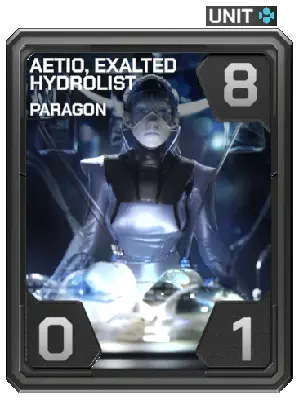
Aetio, Exalted Hydrolist: The source of regenerated life springs eternal for the Kathari behind Aetio’s masterful work. Her fierce pursuit for progress in genetic engineering rapidly elevated her to exalted status. With an endless stream of decaying clones and lethal operatives at her disposal, nothing can quench her thirst for reconstructing the perfect Kathari blueprint.
Paragon Passive:
The first time each turn a friendly Kathari unit enters the field, waste the top card of your deck.
Paragon Active:
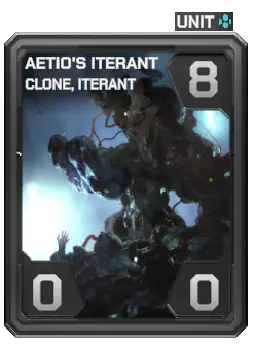
Muster: If your deck is empty, create and play Aetio’s Iterant with Evasive and the sum of all attack, health, and keywords of units in your waste. Aetio's Iterant immediately attacks the enemy player.
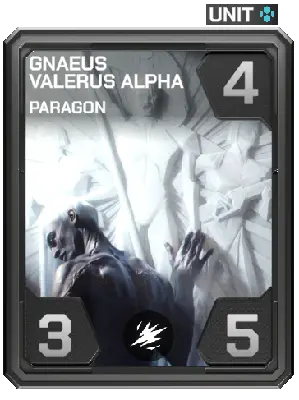
Gnaeus Valerus Alpha: Gnaeus is Europa’s finest combination of strength, military prowess, and unwavering leadership. Warlord of the frozen deep, he carries the Alpha genome but is the Omega deathspell for the enemy. His facial scars are visible proof of his glorious battles, while his elite warrior bloodlines imbue his clones with increased vigor.
Paragon Passive:
At the end of your turn, friendly units that dealt combat damage to the enemy player gain +1/+0, and friendly units that dealt combat damage to enemy units gain +0/+1.
Paragon Active:
Blitz
On attack, up to 3 other target friendly units have +1/+2 this turn.
Scipius Magnus Alpha: A mere echo of his original self, Scipius leans on technology like synthesizers to help keep his Alpha genes intact. While he may be too old to fight, his memories are a collective consciousness of his forefathers, making him a natural leader for the Scipians and Kathari forces alike.
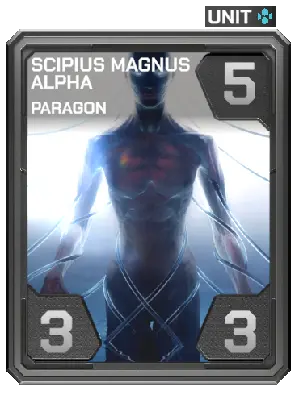
Paragon Passive:
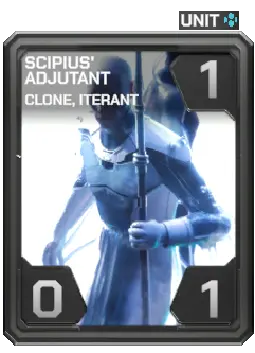
After you bank a unit, create a 0/1 Scipius' Adjutant if you don’t already control one.
Paragon Active:
Muster: Repeat all non-paragon Musters from units you played this game with targets chosen randomly.

Marcolian↩
Lore
When the Exodus took place, humankind’s first and most obvious destination was Mars. At this point in time, humans had already been planting the first seeds of life on the red planet. But when the first generations finally established a foothold in its barren valleys, populating and terraforming the planet reached new heights.
Thousands of years later, a wealthy lineage of commanders built a mighty and powerful red empire. The Marcolian military complex is now feared by all, as their powerful weapons, solar technology, and vehicles maintain dominance over all internal and external threats.
The Marcolian people are organized into two distinct factions, Military and Civilian.
The Military faction is controlled by the leadership group known as High Command. They oversee everyone and all operations in the Crimson Fleet, the Iron and Scout Corps, the Armored Division, Orbital Division, Commando Division, and Intelligence Division.
The Civilian faction is controlled by the superiors in the High Council. They oversee the Science Division, Trade Division, and Media Division. While the Marcolian are known for their military dominance, it is their wealth accrued from trade and propaganda that allow them to pay for an endless supply of weapons and manpower.
The Marcolian’s captivating capital is Valli, a place the general public is proud to call home. It is also the location of the High Command’s sacred Crimson Room. This is where the opulent seats of power come together to discuss diplomacy and execute military objectives. It’s also a place where some of the greatest Marcolian leaders have found their true calling.
Despite the threats from heretics and external forces alike, from within their power-hungry walls, the High Council and High Command maintain meticulous order over their civilians. They provide clear trade networks, a high quality of life, and the promise of a bright future for families that seek a bigger role on the Red Planet.
Playstyle
The Marcolians revel in pure, raw firepower. They excel in aggression with boots on the ground, tactical vehicles, and a wide array of projectiles. By the time their forces are cleared out, a world of pain is flying overhead to finish the fight.
With an explosive arsenal, the Marcolians are for those who want to set the pace of the game from the very beginning.
Paragons
Armored Division HQ: With a civilization built on a dominant and wealthy military, the Armored Division HQ is a beacon of pride for the Marcolian people. Their HQ is where the elite commanders drive the biggest vehicles, operate the heaviest weapons, and ignite the biggest explosions.
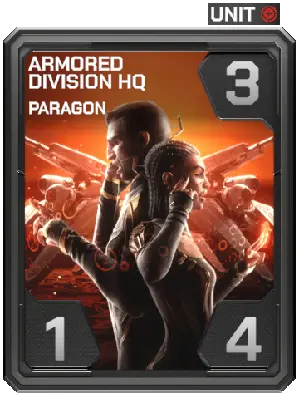
Paragon Passive:
At the end of your turn, choose a benefit for all of your friendly Vehicles.
Paragon Active:
Shielded
This unit can’t attack.
Friendly Vehicles have Battle Ready.
The first time a friendly Vehicle deals damage to a player each turn, draw a card.
Catherine Lapointe, The Mad General: Some of the greatest Marcolian military leaders were not only loved, but feared. In the case of Catherine Lapointe, no high commander has ever induced more loyalty and uncertainty in their people. She is precise, yet unpredictable. Cutthroat, yet calculated. And if she is in charge of a military operation, nobody is safe from her bloodthirsty madness.
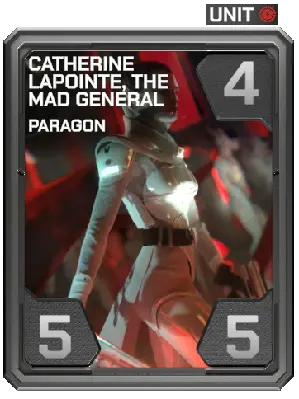
Paragon Passive:
The second unit you play each turn gains +1/+1.
Paragon Active:
After you end your turn, this unit attacks a random enemy.
This unit can't attack on your turn.
Lemieux, Master Commando: Tactical efficiency and swift decision making is at the core of what makes Lemieux such a prestigious Marcolian leader. Alongside his Irregulars, he is the most reliable and experienced piece of the Commando Corps. This gives him the license to establish his own protocols and mission objectives.
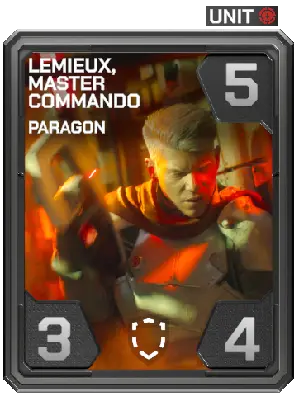
Paragon Passive:
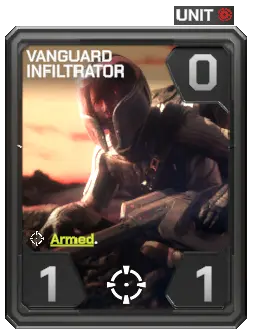
Start the game with a 1/1 Vanguard Infiltrator on the field.
Paragon Active:
Evasive
Muster: Choose one:
- Destroy target damaged unit.
- Put a unit from your waste into your hand.
- Friendly units have +1/+0 this turn.
Assault: Do all three.
Shroud↩
Lore
Long before the Exodus occurred, a team of Earth’s finest explorers took to the skies in search of a new home. Called the Beyond Collective, these brave wayfarers had a simple goal; discover a habitable exoplanet, no matter the cost.
Their ship, known as the New Dawn, took them to distant horizons and successfully pushed into uncharted territories. Once they reached beyond the solar system, they became totally cut off from Earth, leaving them unaware of the impending global cataclysm.
Hundreds of years later, with everyone’s hope beginning to fade, the New Dawn’s current captain discovered something alarming. Even though their engines were idle to conserve energy, they weren’t drifting anymore; they were slowly being pulled into the clutches of a ravenous black hole.
With no way to escape, the Beyond Collective chose to stare death in the face and accept their inevitable doom. As they approached the event horizon, instead of getting spaghettified at the moment of truth, the New Dawn punched through the Singularity and miraculously came out the other side.
During their trip, the New Dawn came into contact with a shrouded presence known as The Great One. Offering salvation and gifts of power, this mysterious entity granted the crew life, but as transformed versions of themselves. The Shroud now serve their new master from beyond, sowing the seeds of chaos and unleashing the fury of the cosmic void on Earth.
The Shroud are organized by powerful leaders called the Gifted, each one overseeing a different division of people.
As the name suggests, the Gifted were bestowed by the Great One with special skills and abilities, including Banishing. As favored members of the Shroud, they are responsible for overseeing their legions. Bela directs the Destroyers, Brand oversees the Stewards, Niamh manages the Fated, Leonid controls the Corrupted, and Bora is in charge of the Marauders.
Playstyle
The Shroud are extremely connected to the Singularity and their supernatural powers. They leverage powerful abilities to remove threats, corrupt their foes, and unleash threats from beyond the Singularity. Their exclusive access to the Singularity allows them to access cards removed by the powerful Banish Keyword ability.
Secretly manipulating the landscape for The Great One, the Shroud are for those interested in careful planning or control.
Paragons
Brand, Steward Eternal: Brand oversees the Stewards and is known for making a sudden and immediate impact on the battlefield. His expertise with banishing units and conjuring corrupted units in exchange drives his success from beyond the void.
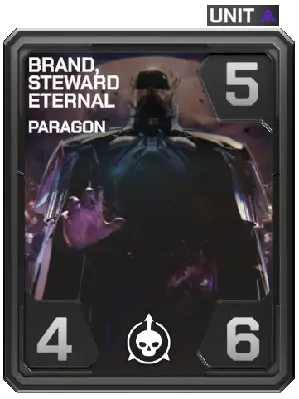
Paragon Passive:
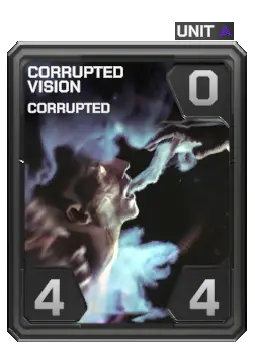
Start the game with a 4/4 Corrupted Vision in your Singularity.
When a friendly unit destroys an enemy unit in combat, give units in your Singularity +1/+0.
Paragon Active:
After this unit damages another unit, banish that unit and transform it into a 4/4 Corrupted Vision.
Aftermath: Return all Corrupted Visions from your Singularity to the field under your control.
Niamh, Wielder of Faith: As the most devout and loyal member of the Gifted, Niamh is revered as the Great One’s finest acolyte. She leans heavily on the Shroud’s arcane effects and upgrades to pull from the Singularity with ease, overwhelming the enemy and causing them to instantly lose their grip on reality.
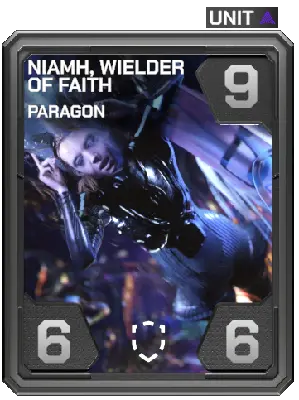
Paragon Passive:
Your deck may not include cards that cost 6 or more energy.
Paragon Active:
Battle Ready, Evasive
This unit can't be targeted by effects.
Muster: For each effect, relic, and upgrade you've played this game, play a random unit from any parallel with the same cost for free.
The New Dawn: The New Dawn is the ship that never fails and never sleeps. The Singularity imbued it with the power to transcend time and space, bringing gifts back from the void with haunting ease. Like an invisible assassin, you may not know it’s there, but you’ll feel it when it suddenly appears out of nowhere to strike you down.
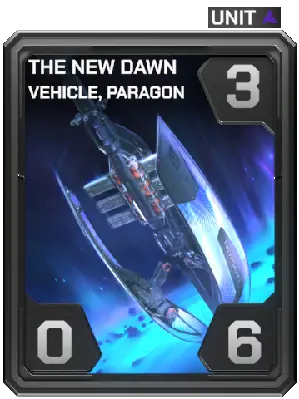
Paragon Passive:
The first time a card leaves your Singularity each turn, deal 1 damage to a random enemy and reveal a random enemy bank card.
If all enemy bank cards are revealed, the enemy plays with the top card of their deck revealed.
Paragon Active:
This unit can't be targeted by effects.
Activate, spend 1 energy, banish this unit: At the start of your next turn, return this unit to the field and put a non-Paragon card from your Singularity into your hand.
Additional Rules↩
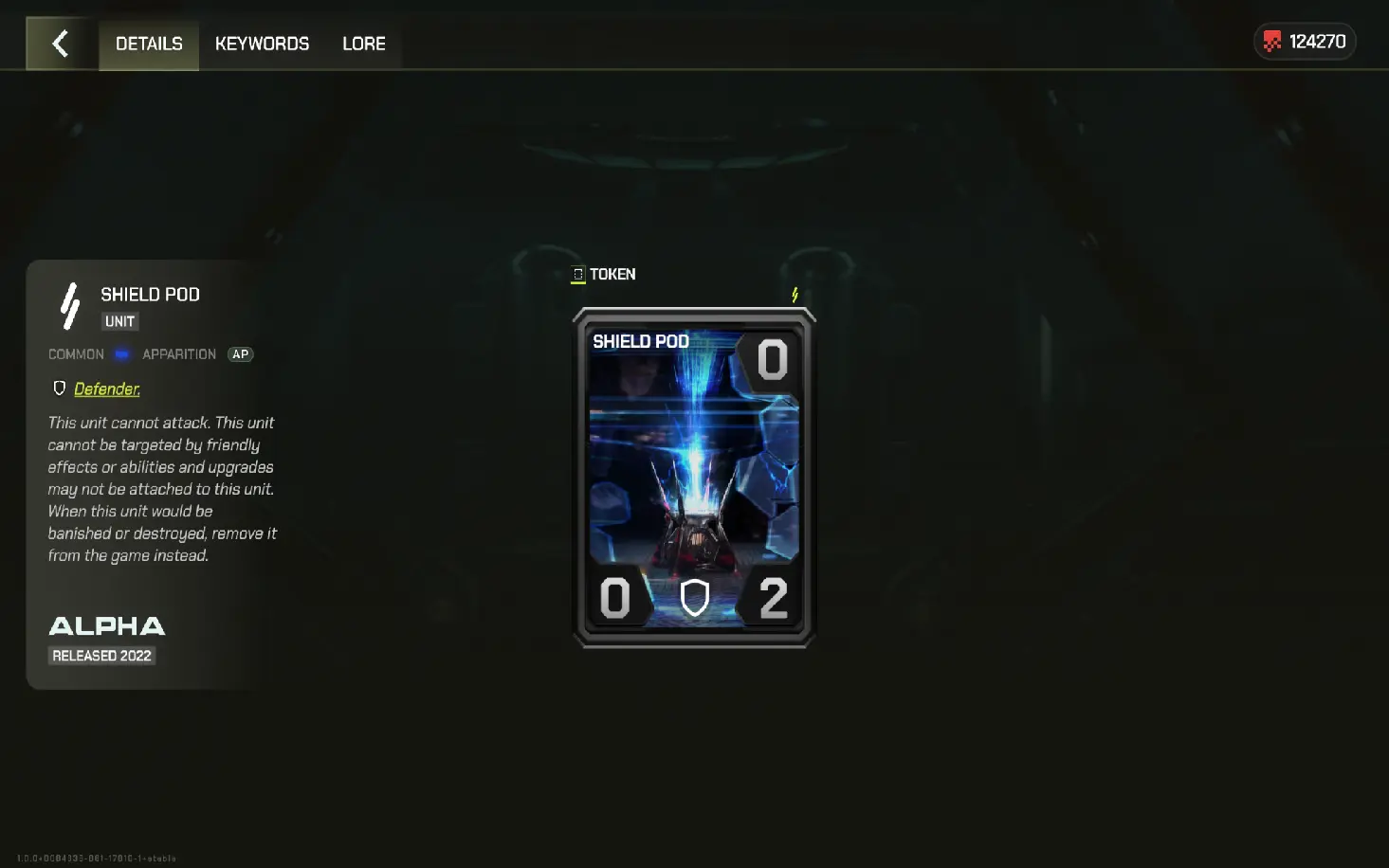
What is a Shield Pod?
A Shield Pod is a Unit given to the player going second in a match. The key thing to note about a Shield Pod is that it has the Defender keyword. A Unit with this keyword may block (or intercept) Enemy Unit attacks intended for another target.
Maximum Hand size
A player may not have more than 8 cards in their Hand. Additional cards drawn or added to the Hand are sent to the Waste.
What happens when my Deck has no more cards in it?
You draw random cards from your Waste instead. Each time you draw from your Waste you will also lose health. You take 1 damage for your first draw and then it doubles each draw (1, 2, 4, 8, etc.).
Unused Energy during your turn
Any unused energy during a turn does not carry over to your next turn. At the start of your next turn your energy is simply refreshed to your current Max Energy.
Advanced Rules↩
Different colored abilities
Abilities given to a Unit from other cards are written in blue. Abilities disabled by other cards are written in red.
Conceal after Revealing in the Bank
If a card in the Bank is Concealed after being Revealed, that card can be inspected by the opposing player to see what it was.
Muster abilities and copies
The Muster ability of a copied card on the Field will only activate if the copy is “played” onto the Field. Creating a copy does not trigger a Muster ability.
Stealth vs. Field-wide untargeted abilities
Units with Stealth are affected by abilities that affect all units on a player's Field or all units on the Field. They also can be affected by abilities that have random targets.
Stealth vs. Defender
Units with Stealth and Defender may block attacks without losing Stealth.
Putting cards in the bank vs. Banking
Cards added to your Bank by card abilities provide energy immediately. However, this does not count as taking the Bank action. To draw a card at the end of your turn, you must still Bank a card from your hand.
Temporary Health
Some card abilities give Units added health. When that added health ability is removed, if that loss would reduce the Unit to 0 or less Health, the Unit is reduced to 1 health instead and is not destroyed.
Can't vs. Can
Whenever one ability tries to start an interaction that another card says can't happen, the interaction does not occur.
Gaining control of enemy units and their associated upgrades
Whenever a player gains control of an Enemy Unit, they also gain control of that Unit’s Upgrades. Any Upgrades that resolve on removal of the Unit will resolve for the player that had control of it on the Field. Only Upgrades that can be attached to enemy units bypass this rule and stay under the original player’s control.
What happens when a Unit is transformed into another Unit?
When a Unit is transformed, its current stats and abilities are reset to that of the new unit it transformed into. If the Unit has been played prior to the turn it was transformed, it can attack. If the unit has been played and transformed within the same turn, it can't attack.
How do Multiple Interactions Resolve if triggered at the same time?
If multiple abilities are activated at the same time the active player has their card abilities trigger in order of first played to last played, then the Enemy Player has their card abilities trigger in order of first played to last played.
What if an ability triggers the ability of another card?
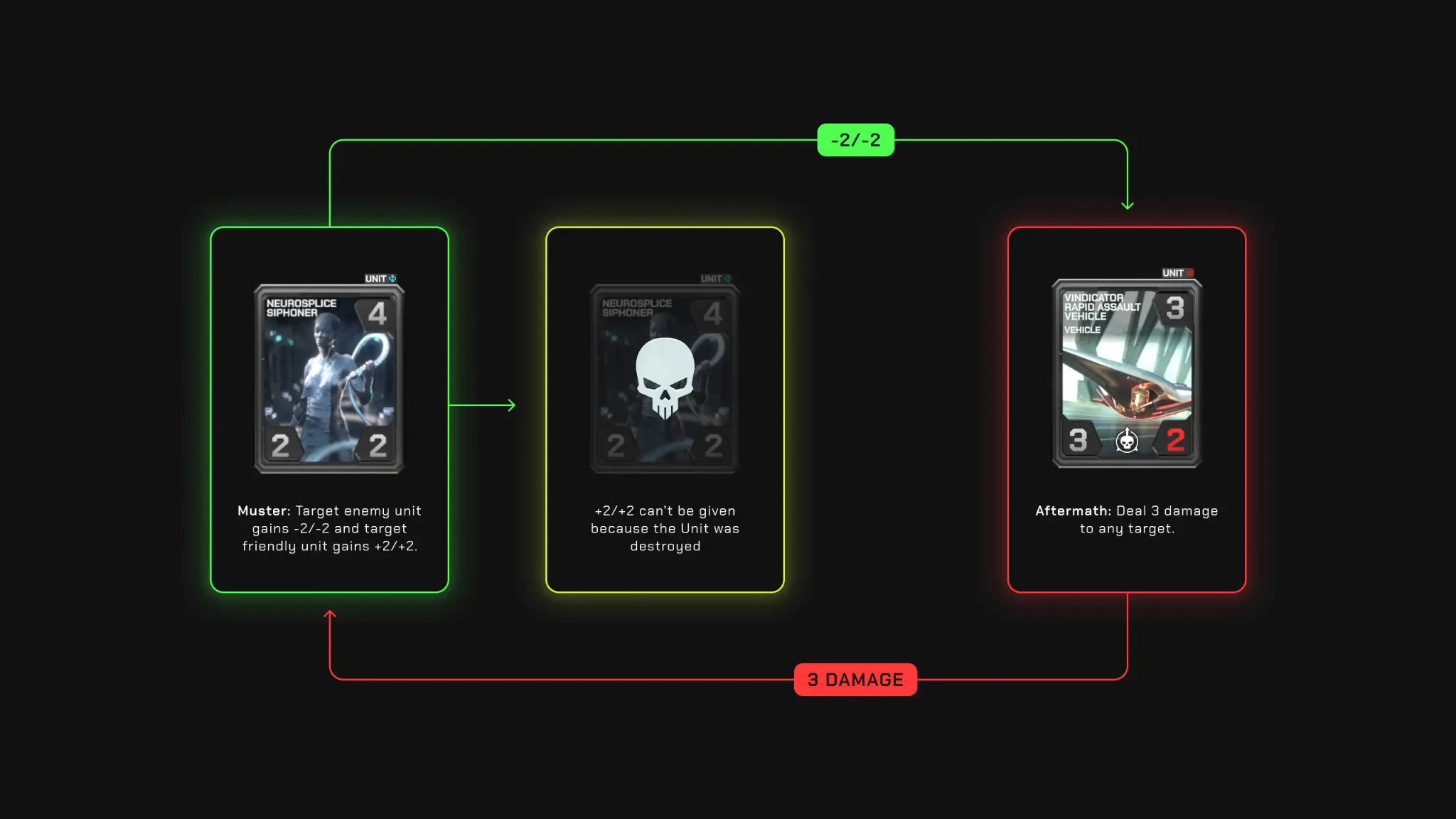
Whenever any step of an ability resolves, the game will check if that triggers another ability. If it does, that ability will trigger, then the remaining card abilities that were previously triggered will continue to resolve in the order explained in “How do Multiple Interactions Resolve if triggered at the same time?”. These are called Sandwich Triggers.
For example: If Neurosplice Siphoner uses its Muster ability on a Vindicator Rapid Assault Vehicle and gives it -2/-2, which destroys the Vehicle, the Aftermath of Vehicle will trigger before Siphoner can complete its Muster and give a Friendly Unit +2/+2. If the Vehicle uses its Aftermath to destroy the Siphoner, then the Siphoner will not be able to resolve the rest of its ability and fail to give a Friendly Unit +2/+2.
What happens when multiple cards are destroyed at the same time that have abilities trigger (simultaneous damage)?
Whenever more than one card would be destroyed simultaneously, abilities will resolve as discussed in the two prior advanced rules. Any ability that targets a card will not be able to target a card that would be destroyed by the original simultaneous destruction.