

Join our
community
Emergence, Part 2: The Kathari
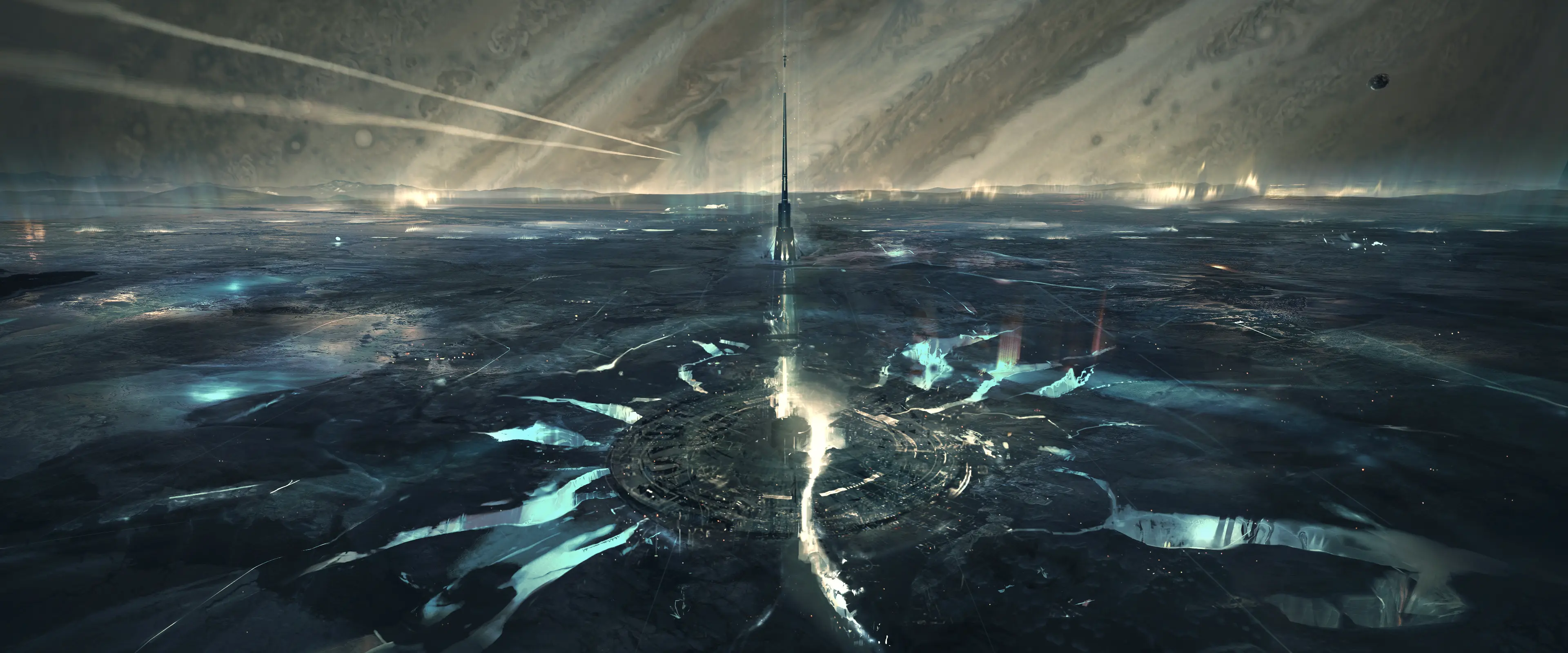
Welcome to Part 2 of Emergence, a Battle Pass lore series that shares some of the untold “origin stories” of the five Parallels. This month we turn our focus to the Kathari, a colony that braved the perils of deep space and turned Jupiter’s icy moon Europa into their new home. ICYMI, here's Part 1: The Earthen.
The Exodus
When Earth unleashed its fury in response to the Cataclysm, the global impact was immediate. Natural disasters started spewing forth from land, sea, and sky, governments were forced to shut down, and daily life came to a screeching halt.
Chaos came next. Civilizations began to unravel, death tolls started rising, and humanity soon realized it had two options to survive: abandon the surface or burrow deep beneath it.
With resources dwindling and time running out, the world’s top scientists were forced to convene. Agreeing that an extinction-level event was imminent, in a final desperate swing at salvation, they decided to build a fleet of giant spaceships powerful enough to transport large colonies of Earth’s finest people across the stars.
The Exodus had arrived; it was time for humans to find a new home.
The Artemis Proxima
One of these giant “vessels of hope” was a behemoth ship expertly retrofitted and upgraded for deep space travel. It was called the Artemis Proxima.
Originally headed for the moon, the Artemis Proxima faced an immediate setback. Due to the natural cataclysms on Earth, upon launch, the ship faced extreme levels of atmospheric debris. This caused a deadly combination of unsustainable turbulence and unpredictable challenges to the ship’s navigational system.
Facing these unforeseen threats, the crew responded swiftly. They completely reworked the Artemis Proxima’s flight charts and chose Jupiter’s icy moon Europa as their new home.

While this added nearly three years to their original trip, the Artemis Proxima had plenty of food and fuel reserves to last the colony multiple lifetimes. The necessities were more than covered, the crew had expertly avoided a dangerous threat, and it appeared to be smooth sailing ahead.
But one thing couldn’t be accounted for. Due to the sheer length of time in deep space, the onset of improper shielding to the Artemis Proxima started to slowly rear its ugly head. Without knowing it, everyone aboard the ship was being silently exposed to radiation.
The result of this was shocking and irreparable. Colony leaders discovered that mass infertility had struck the entire ship. Men and women alike were affected, the radiation acting like a silent killer erasing the lineage they desperately intended to save.
Despite this catastrophic setback, the colony’s resilient nature would ultimately prevail.
Icebreakers
At long last, the Artemis Proxima was within reach of its hopeful new home. After extensive planning, the crew prepared to land on Jupiter’s smallest moon. But Europa’s haunting surface, a pale and frozen wasteland laced with striated bands of reddish-brown particles, was ready to devour them as soon as they touched the surface.
Defying all odds, the Artemis Proxima succeeded thanks to impeccable timing, a pristine hydraulics system, and clear landing operatives. The crew navigated into a “goldilocks zone”, which allowed the ship to gradually slow its engines without destroying their vital resistance shields.

Once the Artemis Proxima came to a complete halt, the next phase initiated. A mighty spire powered by the heart of the ship's engine emerged from both sides of its core, slowly breaking the ice apart. A cacophony of deafening cracks from glacial folds fracturing and bursting into smithereens echoed across the frozen horizon.
Then, once the ship had separated the massive sheets of ice, another spire emerged and started drilling straight down deep into the surface. The Artemis Proxima was tunneling itself into Europa’s icy mantle.
By using the ship's advanced hydraulics and spires, the entire colony was able to insert and nestle itself deep within Europa's surface, transforming it into a sanctuary. It became their source of light, a home base for operations, and a habitable subterranean refuge worth expanding and developing.
Somehow, underneath the surface of this frozen nightmarish moon, the colony found a way to survive. The seeds of a new civilization had been planted, and in its wake, the city of Sepulii was beginning to emerge.
Even though the colony could no longer procreate, after surviving this harrowing icy plunge, they knew they could lean on their advanced technology to do something just as effective -- recreate.
For the mighty Kathari, cloning was the only thing that could save them now.
The Hydroleums
At the core of the Kathari’s origin story is their highly advanced cloning technology, highlighted by their unique and sophisticated Hydroleums. These are, in essence, the Kathari’s engineering nexus; the place where clones are born.
The sacred Hydroleums include both a gestation and a fabrication facility. These facilities are backed by archived genetic blueprints and use special types of biofluids to accelerate genetic development, allowing the subjects (known as Iterants) to rapidly mature into the maker’s specific needs.
Inside the Hydroleums, the highly respected Formaticians work tirelessly to perfect the best genomes from the Cradle’s vaults. They also oversee Sepulii’s synaptic chambers, which is where “Beta” (second generation) clones and beyond (Delta, Gamma, etc) are sent for crucial memory transference.
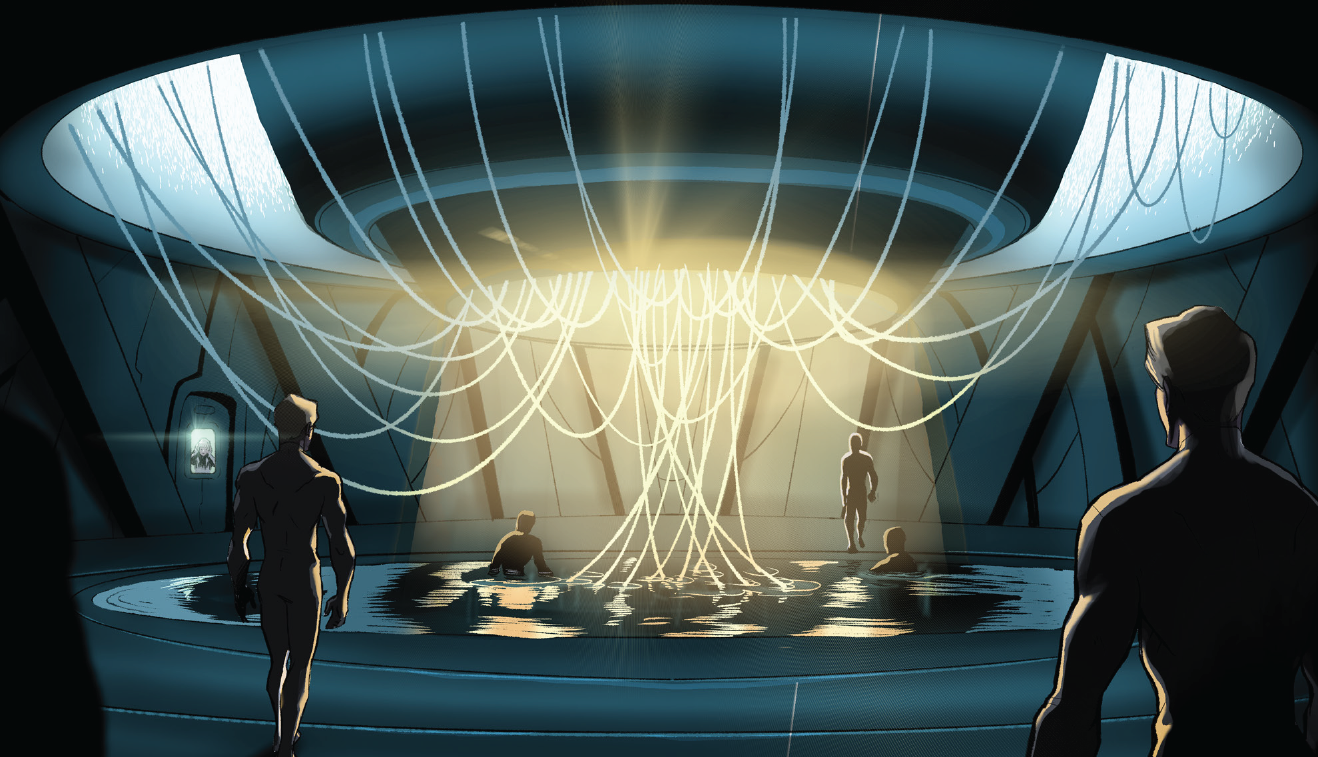
Formaticians are central to the Kathari empire due to their masterful bioengineering skills. They are responsible for transferring past cognitive imprints into current Kathari husks, utilizing various methods of advanced synaptic resonance to tap into previous memory and life cycle data.
By restoring a person's memories, instincts, and tactical knowledge, Formaticians ensure that new clones seamlessly integrate past experiences into their present. This offers continuity of expertise and identity across multiple generations of clones.
In tireless pursuit by Formaticians and Hydrolists alike, Kathari remains are meticulously refined and processed for the pure optimization of the next generation of clones. Each remnant is deconstructed, analyzed, and then reintegrated into the genetic pool, ensuring nothing goes to waste and the mighty Alpha lineage is not only preserved but continually enhanced.
Despite their masterful scientific prowess, none of their work is possible without the cloning information. All of that comes from a single source. It's considered the true heart of the Kathari lifeforce; the Archives.
The Archivists
The Archives is a sacred place in Sepulii where all of the genetic information needed to produce clones is stored. At the core of the Archives are the highly protected and coveted backup copies of the Children of Europa, their DNA stored in Progenitor Pods housed in highly guarded and inaccessible hidden chambers.
Like the Druids of the dark ages in Europe, the Archivists are responsible for remembering, preserving, and passing down the history and origins of their people. They work exclusively inside the hallowed halls of the Archives and are even known to do experiments on themselves.
Like obsessed zealots, the Archivists go to extreme lengths to solve the problem of Kathari DNA degradation. They are the fiery opposites of the Formaticians; they're ready to do whatever it takes to continue the Alpha lineage before time runs out.
As their roots within Sepulii grew deeper, the Kathari lineage expanded and became more complex. Memories and scars were passed along synthetically over many generations, but the cognitive and emotional bonds they shared were eternal and deeply valued.
But one of the earliest races that currently define a major part of the Kathari civilization stands out above the others. The Gallians.
The Gallians
The Gallians are descendants of a man called Galli, who was one of the first optimal clones ever designed by Kathari genetic engineers. They named him after Galileo, the esteemed ancient astronomer who is responsible for discovering Europa.
While he perished shortly after Sepulii was formed, Galli’s sacred genes and memories have been passed down to every single Gallian. He was further immortalized through his collection of 12 teachings, which are known as the Twelve Palms of Galli.
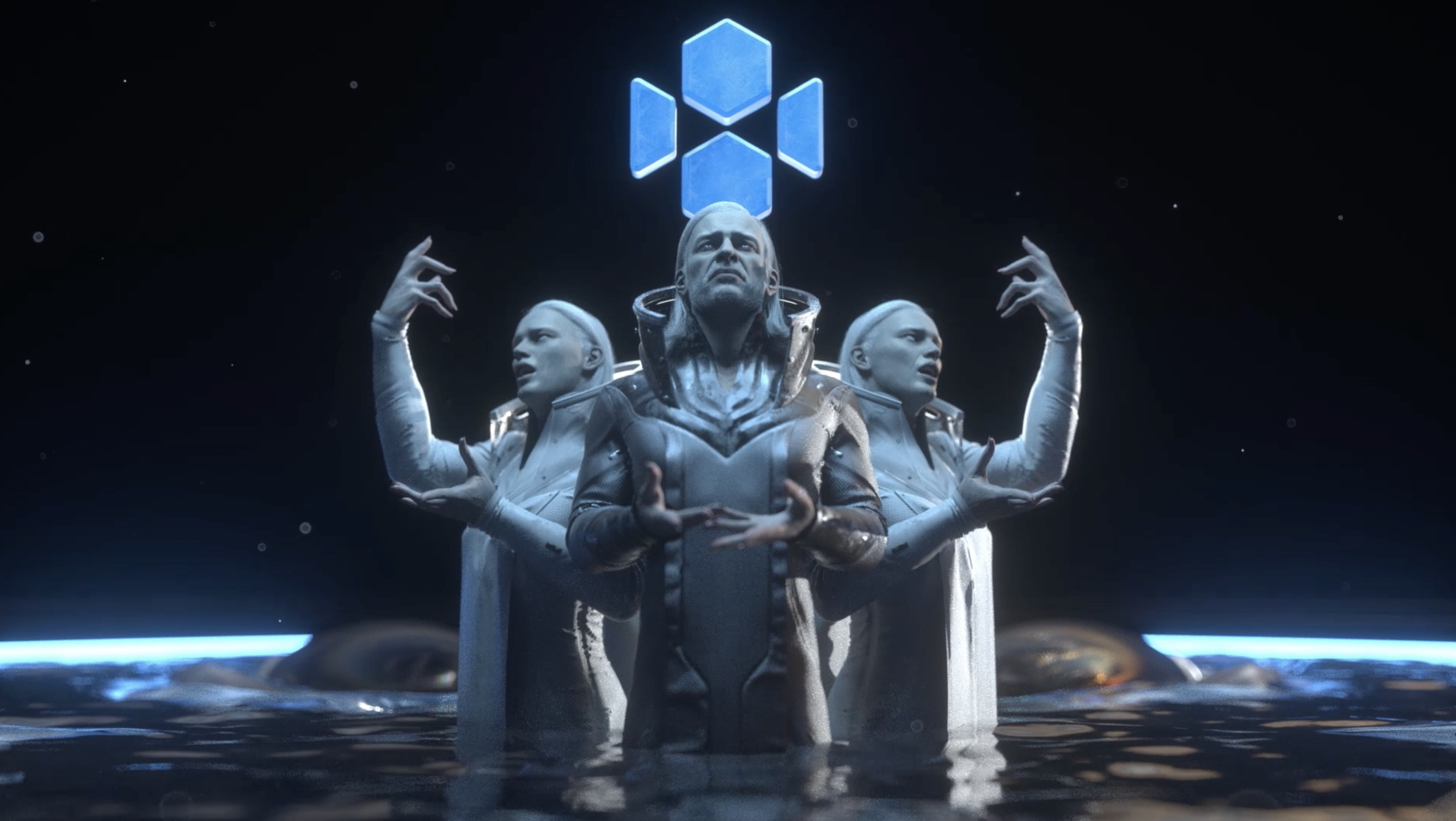
These “Palms” not only etched Galli’s legacy as a Kathari forefather, they became the framework for an entire faith. As seen in the flavor text for the Gallian Orator for example, his teachings are akin to the Ten Commandments.
“Galli’s Twelve Tenets are passed down to every Kathari as they are born. Ask any Kathari and they can recite them by heart.”
The Palms have been referenced a few other times in Parallel lore, each one bringing more intriguing clues to the Gallians and their origins.
For starters, the Kathari relic Eye of Galli, which is a card from the base set, is another keystone in Gallian history. While its origins and true purpose are still unknown, it houses a beam powerful enough to manipulate and rearrange matter. This has deep ties to Kathari history and some of its earliest leaders.
More clues can be found in cards like the Sixth Palm of Galli, the Eighth Palm of Galli, and and a few others, especially in the base (Alpha) set.
There's plenty more to share about the Gallians and many other subcultures within the Kathari civilization, but for now, we hope you enjoyed this deeper dive into their origin story, and how they became one of the most powerful forces in the Parallel universe.